A lung cancer diagnosis: what happens next?
“Can I have surgery, or do I need medicine first?” The answer depends on the cancer type, its extent and your general health. The consultation helps clarify suitable options and the next step for you.
Related videos and posts
The linked Instagram content is in Turkish.
The process at a glance
- Review results: CT images, any PET-CT and biopsy results are reviewed. Further tests are arranged if needed.
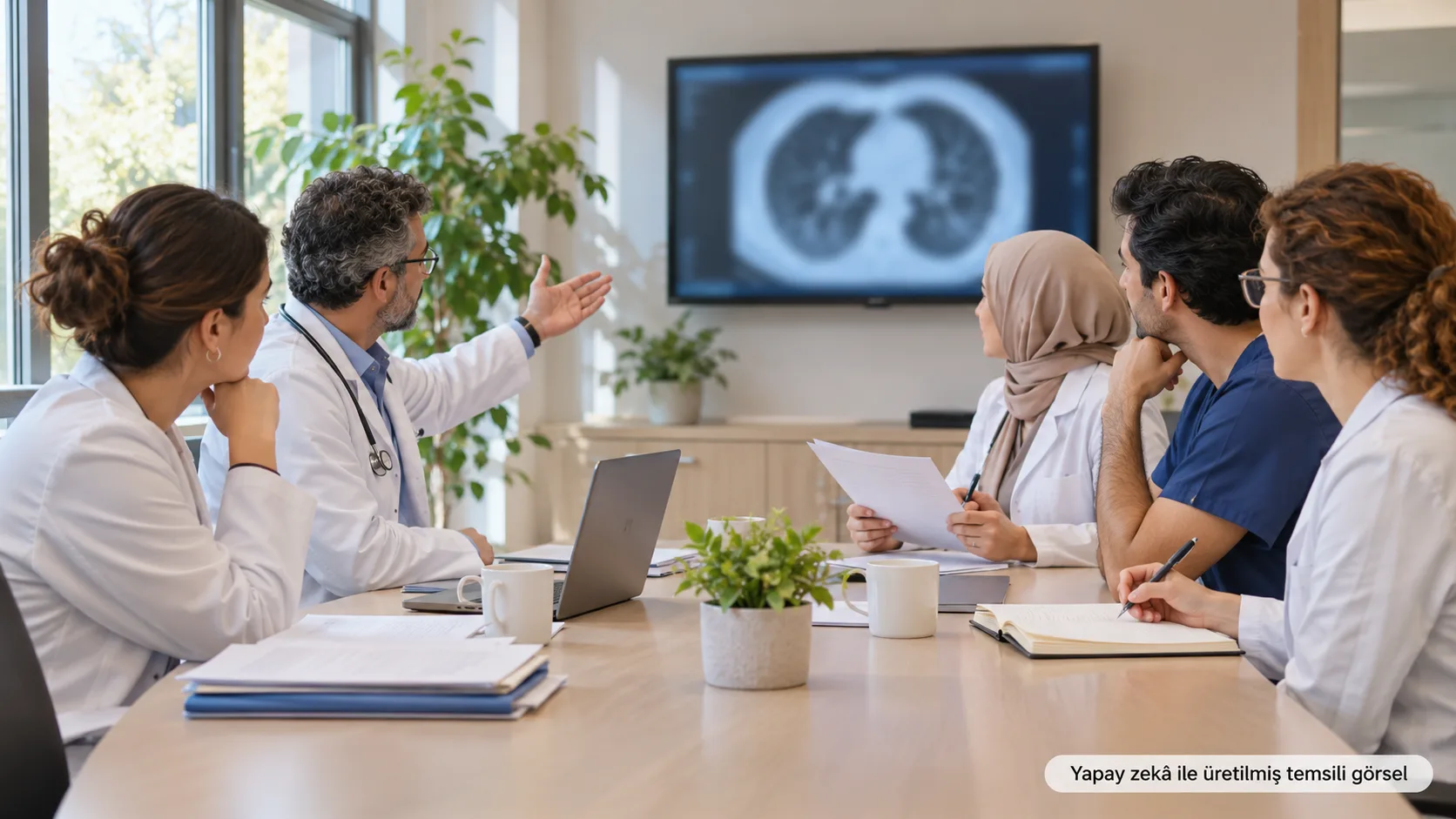
- Plan treatment: The roles of surgery, medicines and radiotherapy are discussed. A thoracic oncology team may review the case together.
- Treatment and follow-up: If surgery is suitable, options including VATS or robotic surgery, risks and recovery are discussed. Pathology findings help guide subsequent care.
What can we clarify at your consultation?
We can review your lung mass, imaging and any biopsy results and discuss whether further testing or surgery may be appropriate.
Plan your consultation in Kadıköy or Bağcılar · Call for an appointment: 444 70 44
We can discuss whether surgery is an option, whether treatment is needed first and how your breathing capacity will be assessed. Existing results can also be reviewed if you would like another opinion.
Please bring: Available CT and PET images, reports, biopsy results, previous treatment records and your medicine list.
Appointments: Book through the hospital or ask for information on WhatsApp.
Your treatment plan is based on an examination and your results.
Which doctor should you see for lung cancer surgery in Istanbul?
If you have a lung cancer diagnosis and want to understand whether surgery is an option, a thoracic surgeon can review your imaging, biopsy results and overall health. When needed, the case is discussed with the thoracic tumour board to plan when surgery or other treatments may be appropriate.
Prof. Dr. Kemal Karapınar sees patients at Medipol Acıbadem District Hospital in Kadıköy and Medipol Mega University Hospital in Bağcılar. If available, bring your chest CT and PET-CT images and reports, biopsy report and any previous treatment summaries. Consultation and contact details.
TRT interview during Lung Cancer Awareness Month
Watch Prof. Dr. Kemal Karapınar’s TRT Haber interview on lung cancer surgery.
Watch the TRT interview on Instagram ↗Prof. Dr. Kemal Karapınar explains
Watch a short explanation about this topic. Videos are in Turkish.

Read detailed medical information and sources
Lung Cancer: Definition, Types, Symptoms, Treatments and Risk Factors
Lung cancer develops when cells in the lungs grow abnormally and form a tumour. It is one of the most common cancers worldwide and a leading cause of cancer deaths. Symptoms may not appear until the disease is more advanced, so timely diagnosis is important. Although it is more common in people who smoke, people who have never smoked can also develop lung cancer.
Types of Lung Cancer
Lung cancer is broadly divided into two main groups.
Non-Small Cell Lung Cancer (NSCLC):
- This is the most common group of lung cancers and also occurs in people who have never smoked.
- Its speed of growth varies between tumours; it should not be assumed to be slow-growing in every case. Some cancers are diagnosed at an advanced stage.
- Major NSCLC subtypes include:
- Adenocarcinoma: The most common subtype. It often develops in the outer parts of the lung and is the most common lung cancer subtype in never-smokers.
- Squamous Cell Carcinoma: Strongly associated with smoking and often arising in or near the larger airways.
- Large Cell Carcinoma: A less common diagnosis. It can arise in different areas of the lungs.
Small Cell Lung Cancer (SCLC):
- It is strongly associated with smoking.
- It usually grows rapidly and may spread early.
- It can progress quickly without treatment, but treatment can provide important benefit.
- Surgery may be considered in carefully staged, very early cases without lymph-node involvement, usually followed by systemic treatment.
- Most patients receive systemic therapy, which may include chemotherapy and immunotherapy, with radiotherapy used according to disease extent and the treatment plan.
Symptoms of Lung Cancer
Lung cancer may initially cause no obvious symptoms. Possible symptoms as it develops include:
- Cough: A persistent cough or a new change in a usual cough is a common symptom. It may be accompanied by blood-stained sputum.
- Breathlessness: A tumour may narrow an airway or otherwise affect breathing.
- Chest Pain: Pain may be felt in the chest and sometimes in the back or shoulder.
- Unexplained Weight Loss: Losing weight without trying can occur, but does not by itself establish the cancer's stage.
- Tiredness: Persistent fatigue or weakness may be a symptom.
- Loss of Appetite: Appetite may decrease as illness develops.
- Hoarseness: Cancer can affect the nerves controlling the vocal cords and cause a change in voice.
- Blood in the Sputum: This can occur at different stages and must be assessed; it is not limited to advanced cancer and can also have other causes.
Lung Cancer Risk Factors
Several factors affect the risk of developing lung cancer:
- Smoking: Tobacco smoking is the leading risk factor. Risk is substantially higher than in people who have never smoked.
- Second-Hand Smoke: People who do not smoke can still be exposed to cancer-causing substances in other people's tobacco smoke.
- Air Pollution: Long-term exposure to polluted outdoor air increases risk.
- Occupational Exposures: Asbestos and some other hazardous workplace agents can increase risk.
- Family History: A family history may reflect inherited susceptibility, shared exposures or both.
- Age: Lung cancer is more common in older adults, including those over 60, although it can occur at younger ages.
- Other Lung Conditions: COPD or pulmonary fibrosis, among other conditions, may be associated with increased risk.
Diagnosis and Assessment of Lung Cancer
Assessment usually involves several steps:
- Physical Examination: The doctor reviews symptoms, medical history and examination findings.
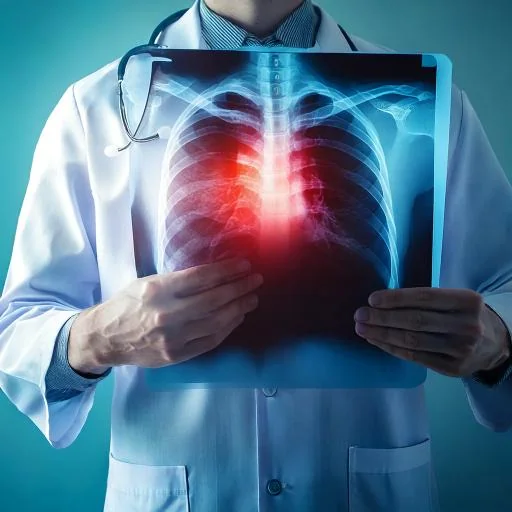
- Chest X-Ray and Computed Tomography (CT): These tests can identify and assess suspicious lung abnormalities.
- Bronchoscopy: A camera examines the airways and can be used to obtain tissue samples.
- Biopsy: A sample is examined to confirm the diagnosis and cancer type. Additional investigations determine stage and treatment-relevant molecular features.
- PET-CT and Brain MRI: These tests may be used when indicated to assess whether the cancer has spread beyond the primary site.
How is suitability for lung cancer surgery assessed?
The decision to operate is not based on tumour size alone. The cancer type, location, spread to lymph nodes or other organs, lung function and general health are considered together. Surgery for early-stage lung cancer is an important treatment option; the role of surgery in more advanced disease is determined individually.
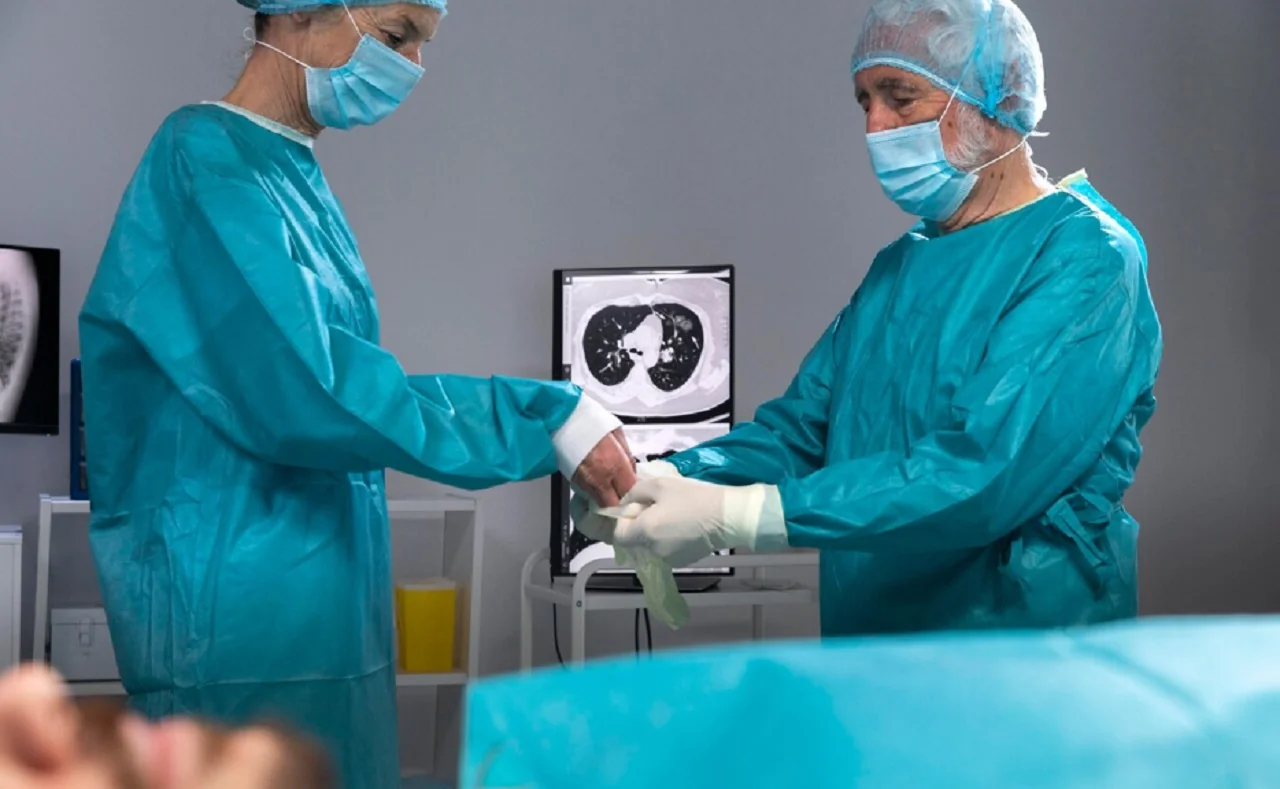
Preoperative assessment aims to establish the diagnosis and stage and weigh the expected benefits and risks of the proposed operation. This may involve:
- Chest CT and, in suitable patients, PET-CT to assess disease extent; brain imaging is planned according to stage and clinical findings.
- Bronchoscopy, biopsy or lymph-node sampling when needed to support diagnosis and staging.
- Lung function tests and DLCO, a measure of the lungs' ability to transfer gas; some patients also need exercise testing and cardiac assessment.
- Review of other conditions, medicines, nutrition and everyday activity levels.
Not everyone needs the same investigations. Findings may be discussed by specialists at a multidisciplinary thoracic tumour board to plan the sequence of treatments. Some patients receive medicines or radiotherapy first, with surgery considered after reassessment; lung cancer surgery after neoadjuvant treatment explains this approach. Receiving treatment before surgery does not guarantee that an operation will follow.
Lung Cancer Treatments
Treatment depends on the cancer type, stage, general health and other individual factors. Options may include:
Surgery: Cancer can be removed surgically in many early-stage cases and selected more advanced cases as part of combined treatment. The operation depends on tumour location and extent and on the patient's ability to tolerate resection. Possible operations include:
- Wedge Resection, often used for diagnosis and sometimes for treatment in selected patients.
- Segmentectomy.
- Lobectomy.
- Sleeve lobectomy, involving reconstruction of an airway and sometimes a blood vessel.
- Pneumonectomy.
- Sleeve pneumonectomy, a complex extended procedure.
- Other extended resections when required and appropriate.
Chemotherapy: In suitable patients, chemotherapy may be given before surgery to treat the cancer and shrink the tumour, or after surgery to reduce recurrence risk. It can also form part of treatment when surgery is not appropriate. Its use and sequence with other treatments depend on the cancer type, stage and the patient's condition.
Radiotherapy: Radiotherapy uses high-energy radiation to treat cancer cells. It may be used when surgery is unsuitable, as part of combined treatment in selected cases, or to relieve symptoms.
Targeted Treatment: These medicines act on particular molecular features of cancer cells. Testing helps identify patients who may benefit. Targeted treatments can also affect healthy tissues and cause side effects; they are not harmless to normal cells.
Immunotherapy: Immunotherapy helps the immune system recognise or attack cancer cells. It is used in selected early-stage and advanced cancers, depending on the treatment setting and tumour features.
Palliative Care: Palliative care aims to relieve symptoms and improve quality of life. It can be provided alongside cancer treatment at any stage according to need, not only at the end of life.
Recovery and follow-up after surgery
Recovery varies with the operation, the amount of lung tissue removed and the person's general health. Pain relief, walking and breathing exercises advised by the team, nutrition and planned follow-up are parts of this process. The pathology results help determine whether further cancer treatment is needed. My guide to lung cancer surgery and recovery explains the journey from preparation to discharge and follow-up in more detail. This information does not replace an individual assessment and treatment plan.
In my article on the pathology report after early-stage lung cancer surgery, I explain microscopic findings using a 402-patient study I co-authored.
Related conditions and procedures
- Early-Stage Lung Cancer Surgery (VATS/Thoracotomy, Segmentectomy and Lobectomy)
- Surgery for Locally Advanced Lung Cancer: Extended Resection, Sleeve Lobectomy and Pneumonectomy
- Lung Cancer Surgery After Neoadjuvant Treatment (Chemotherapy, Immunotherapy and Radiotherapy)
- Extended Surgery for Lung Cancer
- Robotic Thoracic Surgery
- Lung Nodule Follow-up and Surgery
Further reading on this topic
The following articles cover diagnosis, treatment planning and recovery in more detail.
- Is Chemotherapy Needed for Stage 1 Lung Cancer? Treatment Options 2025
- Is There Stage 5 Lung Cancer? Advanced Disease, Symptoms and Treatment in 2025
- Lung Cancer Surgery: Understanding the Journey from Diagnosis to Recovery
- Lung Cancer Symptoms: When Should You See a Doctor?
- Lung Cancer Treatment in 2026: New Methods, Targeted Medicines and Personalised Care
- 5 Innovative Surgical Approaches to Lung Cancer Treatment
- A 6 cm Lung Mass: What It Means, Staging and Treatment
- What Increases Lung Cancer Risk? The Main Risk Factors in 2025
- Lung Cancer Spread to the Brain: Risk Factors, Symptoms and Outlook 2025
- What Are the Stages of Lung Cancer and the Treatment Options? 2025
- How Is Lung Cancer Treated? 2025
- Lung Carcinomas: Types, Symptoms and Treatment in 2025
- Improving the Chances of Survival: What Is Stage 2 Lung Cancer Treatment?
Sources and further reading
These resources provide general background on this topic; they do not replace an individual medical assessment.
- National Cancer Institute — Non-Small Cell Lung Cancer Treatment (PDQ®)
- MedlinePlus — Lung surgery
- NICE NG122 — Lung cancer diagnosis and staging
- NICE — Investigations before lung cancer treatment
- Leeds Teaching Hospitals — Preparing for and recovering from lung surgery
A team approach to treatment planning
In my article on thoracic tumour boards and lung cancer treatment in Istanbul, I explain the multidisciplinary approach at the two hospitals where I work on the Asian and European sides of the city.