
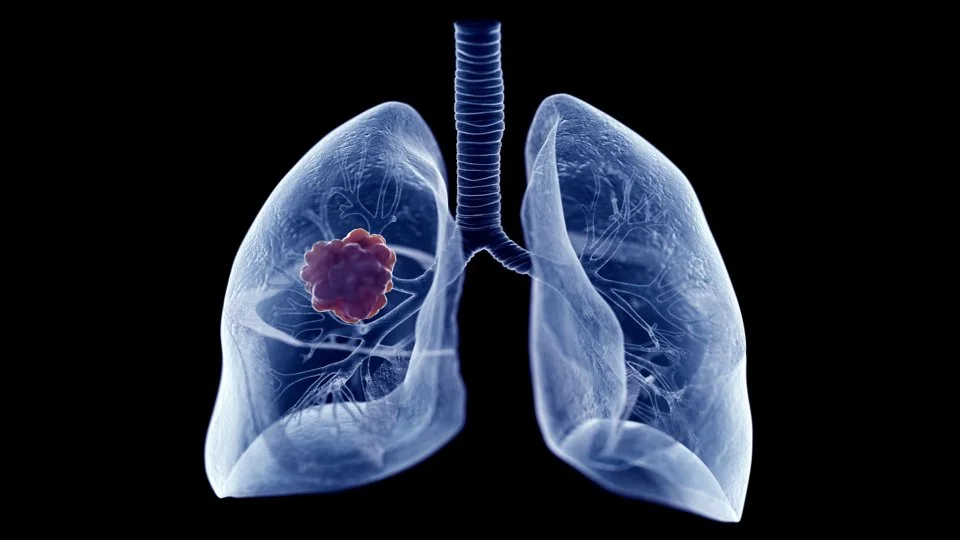
Hearing a diagnosis of lung cancer can be an unforgettable turning point for patients and their families. With advances in medicine, the diagnosis can also be met with the strength that comes from early detection and informed treatment. In particular, stage 2 lung cancer is a stage at which timely, appropriate treatment can substantially improve the outlook.
Related videos and posts
The linked Instagram content is in Turkish.
For the broader clinical context, see Lung Cancer: Symptoms, Treatment and Surgery.
At stage 2, the cancer remains relatively limited. It may be confined to part of the lung, with possible involvement of nearby lymph nodes. Effective treatment is still possible, making decisions at this stage particularly important.
“What is lung cancer treatment, and how is stage 2 treated?” is an important question for newly diagnosed patients and their relatives. The available treatments, their sequence and an individual treatment plan influence both the course of the disease and the results.
This article explains what stage 2 means, the treatment options, modern approaches and quality of life after treatment, step by step. Its aim is to help you make informed decisions and understand developments that offer grounds for hope.
Knowledge can help you take an active role in your care. Having the right information at the right time can make a meaningful difference.
Contents
- What is stage 2 lung cancer?
- Symptoms and diagnostic methods
- Treatment options
- Modern approaches and targeted therapies
- Follow-up and quality of life
- Frequently asked questions
- Conclusion
What is stage 2 lung cancer?
The “stage” describes how far a cancer has spread and which structures are affected. Stage 2 lung cancer is a stage at which disease remains relatively localised but may have reached surrounding structures or nearby lymph nodes. It is more advanced than the earliest stage, yet treatment with the aim of cure may still be possible.
📌 Definition and extent of spread
Stage 2 is generally divided into two substages:
Stage 2A
- Under TNM version 9, this can include a tumour larger than 4 cm but no larger than 5 cm without regional nodal spread (T2bN0M0).
- It can also include a tumour up to 3 cm with spread to same-side hilar or intrapulmonary nodes (T1N1M0).
- The complete tumour and lymph-node findings determine the substage.
Stage 2B
- This can include a tumour larger than 5 cm but no larger than 7 cm without regional nodal spread (T3N0M0).
- Certain smaller tumours with specified nodal involvement also fall into stage 2B.
- Selected chest wall involvement can be T3. Diaphragm invasion is T4 and should not be presented as a general feature of stage 2.
📊 Note: Stage 2 has no distant metastases. Local treatment, such as surgery, may therefore be used with curative intent in suitable patients.
| Substage | Examples in TNM version 9 | Lymph-node assessment | Metastases |
|---|---|---|---|
| 2A | T2bN0M0 or T1N1M0 | Considered with tumour size and features | No distant metastases |
| 2B | Groups such as T3N0M0 | The complete T and N findings determine the substage | No distant metastases |
🔬 Small cell and non-small cell cancer
Lung cancer is divided into two main groups according to its cell type. Treatment differs between these groups.
Small cell lung cancer (SCLC)
- This type tends to grow and spread rapidly.
- It is often described as “limited-stage” or “extensive-stage”.
- Stage 2 is uncommon and usually falls within limited-stage disease.
- Chemotherapy and radiotherapy are the main treatments.
Non-small cell lung cancer (NSCLC)
- This accounts for approximately 85% of lung cancers.
- Subtypes include adenocarcinoma, squamous cell carcinoma and large cell carcinoma.
- Stage 2 NSCLC may be removable by surgery and can respond well to treatment.
| Type | Treatment approach | Stage 2 presentation |
|---|---|---|
| Small cell (SCLC) | Chemotherapy + radiotherapy | Uncommon |
| Non-small cell (NSCLC) | Surgery + adjuvant chemotherapy | Common |
🎯 Stage 2 is a point at which local and whole-body treatments are considered together. Meaningful prospects for long-term survival remain, and careful treatment planning is important.
Symptoms and diagnostic methods
Some people with stage 2 lung cancer still have no obvious symptoms. Others develop signs that can be recognised with careful attention. Because these can resemble other respiratory illnesses, diagnosis may be delayed. Awareness is particularly important for people at higher risk.
🩺 Typical symptoms
Symptoms may result from the growing tumour's effects within the lung or its involvement of surrounding tissues.
Common symptoms
- A persistent cough that becomes worse
- Blood in sputum (haemoptysis)
- Chest pain or a stabbing sensation, especially on taking a deep breath
- Breathlessness and wheezing
- Loss of appetite and unexplained weight loss
- Repeated bronchitis or pneumonia
- Fatigue, weakness and drowsiness
Diagnostic tests and assessment
Symptoms often start the diagnostic process, but imaging and tissue sampling are needed to establish the diagnosis. These tests support accurate staging and appropriate treatment planning.
Main diagnostic methods
- Chest X-ray: An initial imaging test. It may reveal a larger tumour but can miss small lesions.
- Computed tomography (CT): Provides detailed images of lung tissue and helps establish the tumour's size and extent.
- PET-CT: Assesses metabolic activity and helps investigate possible spread to lymph nodes or other organs.
- Bronchoscopy: A camera is used to inspect the airways and obtain samples from suspicious areas.
- Needle biopsy (core or Tru-Cut biopsy): A needle passes through the skin to sample the tumour. Tissue analysis identifies its type and subtype.
- Molecular tests: Examine changes such as EGFR, ALK and ROS1 alterations. The findings help guide targeted treatment.
| Test | Purpose | Advantage |
|---|---|---|
| CT | Tumour size and location | Detailed imaging |
| PET-CT | Extent and activity | Assessment for metastases |
| Biopsy | Tissue diagnosis and information supporting staging | Molecular analysis |
| Bronchoscopy | Airway examination and tissue sampling | Direct inspection and intervention |
🎯 Recognising symptoms and using appropriate diagnostic tests to establish the stage are central to treatment. Timing matters when treatment remains possible with curative intent.
Treatment options
Stage 2 lung cancer is among the stages that may be treated with the aim of cure. Treatment aims to remove the tumour completely and reduce the risk of recurrence. The plan depends on the cancer type, general health and molecular test results.
🛠️ Surgery and lobectomy
For suitable patients with stage 2 NSCLC, surgery is usually a central treatment. The aim is to remove the cancer-containing tissue and assess or remove relevant lymph nodes.
Main surgical procedures
- Lobectomy: Removal of one lobe of the lung. This is the procedure most commonly preferred for stage 2 disease.
- Segmentectomy or wedge resection: More limited removal of lung tissue, considered for selected small, localised tumours.
- Pneumonectomy: Removal of an entire lung when required by the extent of the tumour.
📌 Surgery is usually performed under general anaesthesia. A hospital stay of 1–2 weeks may be required, depending on the procedure and recovery. Rehabilitation and adjustments to daily life then become important.
Chemotherapy, radiotherapy and combined approaches
Microscopic cancer cells may remain after surgery. Adjuvant chemotherapy, meaning treatment given after surgery, aims to eliminate them. In some patients, chemotherapy may instead be given before surgery as neoadjuvant treatment.
Chemotherapy
- Treatment commonly includes platinum medicines such as cisplatin or carboplatin in a combination regimen.
- Courses may involve 4–6 cycles, with cycles around 3 weeks apart.
- Side effects can include hair loss, nausea and fatigue; supportive treatment can help manage these.
Radiotherapy
- High-energy radiation can treat the tumour when surgery is not possible or the patient is not suitable for an operation.
- It aims to control disease locally.
- In some situations it is given with chemotherapy as chemoradiotherapy.
Combined approaches
- Surgery + chemotherapy
- Chemotherapy + radiotherapy
- Surgery + radiotherapy + targeted therapies, where individually appropriate
| Treatment | Timing | Aim |
|---|---|---|
| Surgery | Often an initial treatment | Remove the tumour |
| Chemotherapy | Before or after surgery | Treat microscopic cancer cells |
| Radiotherapy | After surgery in selected cases, or without surgery | Shrink or control the tumour |
🎯 An important advantage at stage 2 is the absence of distant spread. This allows local treatment and systemic treatment to be combined where appropriate, with the aim of controlling the disease and reducing recurrence.
Modern approaches and targeted therapies
Alongside established treatments, personalised medicine plays an increasing role. Treatment informed by the tumour's molecular features can improve the outlook for suitable patients, including after surgery or when an operation is not appropriate.
🧪 Immunotherapy and mutation-specific medicines
🛡️ Immunotherapy
Immunotherapy helps the immune system recognise and attack cancer cells, directing the body's own defences against the tumour.
- PD-1/PD-L1 inhibitors: Help prevent tumour cells from hiding from the immune system. Examples include nivolumab and pembrolizumab.
- In stage 2 disease: Adjuvant immunotherapy is increasingly considered for selected patients, including those whose tumours express PD-L1.
🧬 Targeted therapies
Some tumours have specific genetic alterations. Medicines developed against these alterations target particular tumour pathways and may limit some effects on healthy tissue.
- EGFR mutations: In the postoperative setting, osimertinib may be considered for eligible EGFR-mutated cancers; the drug must fit the stage and clinical indication.
- ALK rearrangements: Adjuvant alectinib may be considered for eligible ALK-positive cancers.
- ROS1, BRAF, MET and other alterations: May be treated with medicines directed at the relevant alteration.
📌 Treatment selection depends on molecular testing of a biopsy or surgical specimen. The appropriate drug and its role at stage 2 require individual assessment; identifying an alteration does not make every targeted medicine suitable in every setting.
Personalised treatment
Modern oncology places increasing emphasis on individual planning. Factors include:
- The tumour's molecular profile, including mutations and protein expression
- Its size and location
- Age, physical functioning and long-term medical conditions
- Life expectancy, preferences and lifestyle
Combination treatments
- Surgery + targeted therapy
- Chemotherapy + immunotherapy
- Immunotherapy + radiotherapy, in appropriate circumstances
These approaches aim to improve treatment outcomes while supporting patients in managing side effects.
📌 Stage 2 treatment is no longer limited to traditional methods alone. Molecular testing, immunotherapy and targeted treatments allow more personalised decisions for eligible patients.
Follow-up and quality of life
Care does not end when treatment finishes. Follow-up is important for detecting possible recurrence, addressing treatment effects and maintaining quality of life. Regular appointments, healthy habits and psychological support form the basis of this period.
📅 Follow-up schedules
The schedule depends on the cancer type, treatment received and general health. The following illustrates a follow-up approach; the treating team sets the actual schedule.
First 2 years
- The team sets the chest CT interval according to treatment and clinical needs; a three-monthly scan is not mandatory for everyone.
- Blood tests and physical examinations may be performed.
- Symptoms and lung function are assessed.
Years 2–5
- Appointments may be held every 6 months.
- PET-CT or other imaging may be used if clinically needed.
After 5 years
- Annual review is recommended in the follow-up plan.
- Continued awareness remains important even when recurrence becomes less likely.
🎯 Continued smoking increases health risks after treatment. Participation in smoking-cessation programmes is encouraged.
Recurrence, supportive therapies and lifestyle
Recurrence
Cancer can return after stage 2 treatment. The risk varies according to tumour biology and the response to treatment.
- Recurrence may involve the liver, brain, bones or other lung lobes.
- Ongoing care includes:
- Follow-up during and after immunotherapy or chemotherapy
- Stress management and psychological support
- Exercise and nutrition plans
Supportive therapies
- Physiotherapy: Supports breathing capacity after surgery.
- Nutrition support: A balanced diet including antioxidant-containing foods and fewer highly processed foods is encouraged.
- Psychological support: Depression, anxiety and loss of motivation can occur. Psycho-oncology services and support groups may help.
Quality-of-life advice
- Stop smoking and avoid alcohol, following medical advice.
- Take regular light-to-moderate exercise, such as walking or yoga, as appropriate.
- Maintain adequate fluid intake and regular sleep.
- Discuss safe sunlight exposure and vitamin D needs with the team.
- Take supplements only on medical advice.
Frequently asked questions
Can stage 2 lung cancer be cured?
Yes, cure is possible, particularly in NSCLC when the tumour can be completely removed. Adjuvant chemotherapy and other appropriate treatments can improve the chances of a successful outcome.
Which treatment is most effective?
Surgery is a central treatment for suitable patients. Chemotherapy, selected use of radiotherapy and sometimes immunotherapy may also be appropriate. Targeted medicines may be considered when relevant molecular alterations are present.
Can the cancer return?
Yes. Appropriate treatment aims to reduce recurrence risk, while regular appointments help detect problems promptly. Lifestyle changes support health during recovery and follow-up.
Is immunotherapy necessary?
Not for everyone. It may be recommended after surgery in selected patients, including some with PD-L1-positive tumours or a higher recurrence risk. Molecular testing and the overall clinical situation guide the decision.
What is the outlook?
Outlook varies with the precise substage, tumour biology, treatment and general health. An unsupported percentage cannot predict an individual’s survival.
Is stopping smoking essential?
Yes. Continued smoking can worsen treatment response, increase recurrence risk and shorten survival. Smoking-cessation support is an integral part of treatment.
Conclusion
Stage 2 lung cancer is a stage at which treatment with the aim of cure may be possible. The disease has not spread to distant organs, and surgery and other treatments can often be used. Accurate information, informed decisions and active participation in care help patients navigate the process.
Personalised approaches, targeted medicines and immunotherapy have expanded the options available for suitable patients. Better information and technology support more effective treatment planning.
Awareness and a clear treatment plan are important first steps in facing the diagnosis.
Sources and further reading
These resources provide general background on this topic; they do not replace an individual medical assessment.