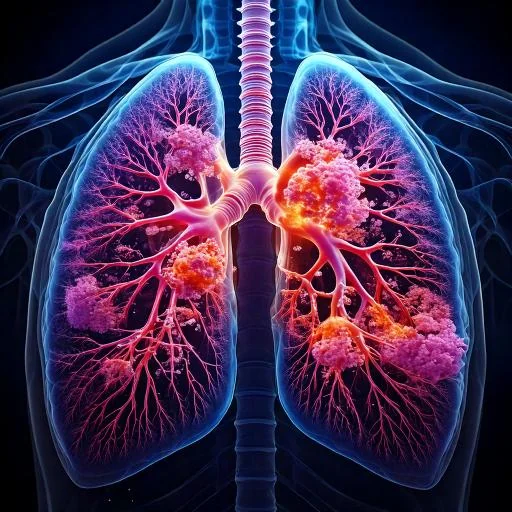
Locally advanced lung cancer has spread locally or regionally without distant metastases. It may involve structures close to the lung or regional lymph nodes. Surgery can have an important role in selected patients, but involvement of major blood vessels, the central airways or other critical structures can make an operation more complex. Not every locally advanced cancer is suitable for surgery.
Related videos and posts
The linked Instagram content is in Turkish.
For the broader clinical context, see Lung Cancer: Symptoms, Treatment and Surgery.
Extended resection refers to a larger operation selected according to the tumour's location and extent. Specialised procedures may also be needed, including sleeve lobectomy or pneumonectomy. A sleeve lobectomy can preserve functioning lung in suitable patients; pneumonectomy removes an entire lung and is not a lung-sparing operation.
This article explains surgery for locally advanced lung cancer, with particular attention to extended resection, sleeve lobectomy and pneumonectomy.
Locally Advanced Lung Cancer and Surgery
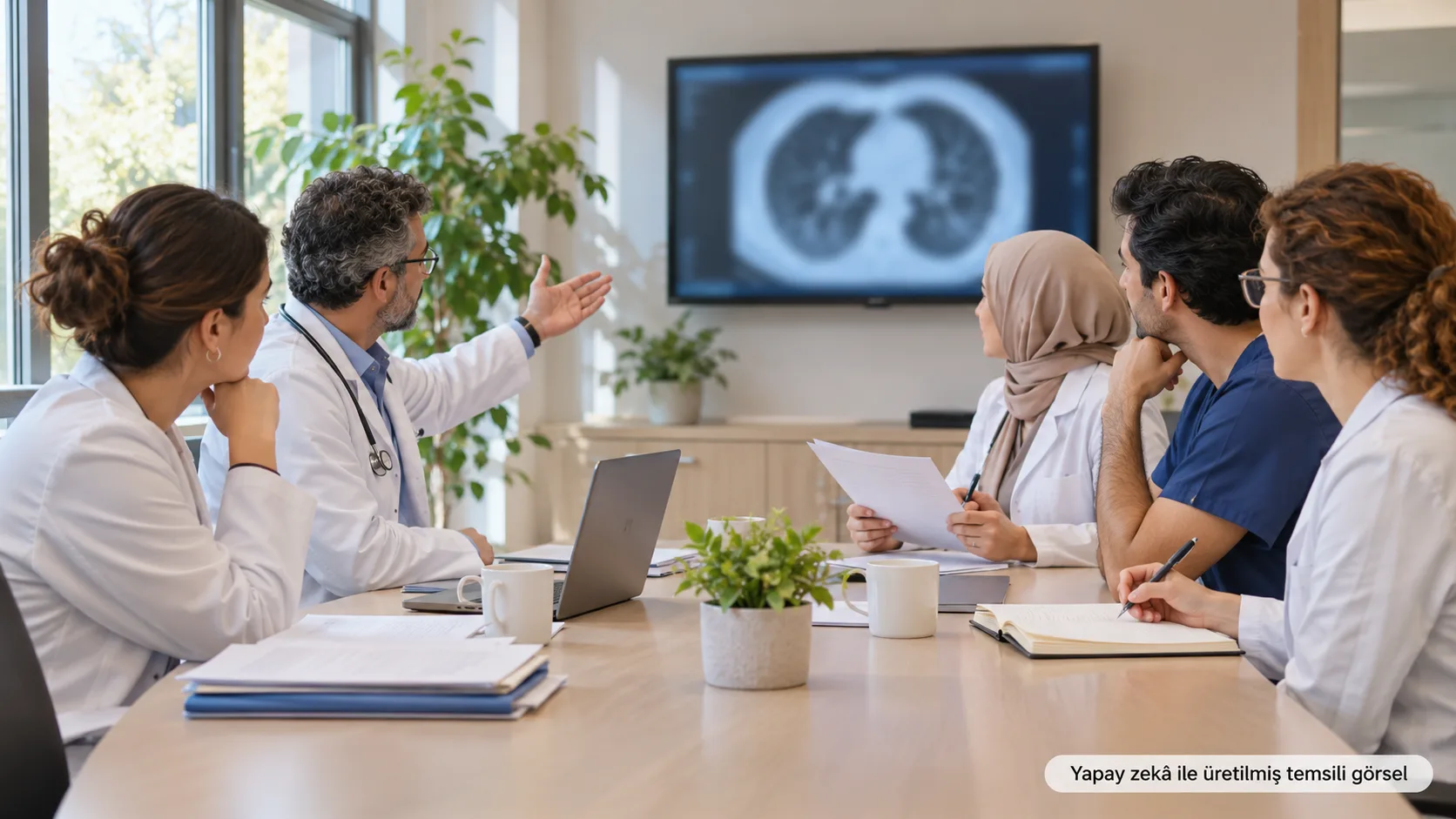
Locally advanced cancer may involve nearby structures without spreading to distant organs. Treatment is planned by a multidisciplinary team. In selected surgical candidates, neoadjuvant treatment—chemotherapy, immunotherapy or radiotherapy, in an appropriate combination—may be given before an operation. It can shrink a tumour and treat microscopic disease, but response and suitability for surgery must be reassessed afterwards.
The aim of surgery is complete removal of the cancer while considering the patient's health and remaining function. Involvement of surrounding tissues and critical structures makes planning more complex. Extended resection and airway-reconstructing procedures are among the techniques considered in this setting.
What Is Extended Resection?
Extended resection goes beyond a standard lobectomy, removing involved neighbouring structures together with the lung tumour when appropriate. It may be needed when cancer affects structures such as a major vessel, bronchus, chest wall or diaphragm. The goal is a complete resection with clear margins; the likelihood of benefit, risks and effect on quality of life vary between patients.
It may be considered when:
- The cancer involves blood vessels, bronchi or other structures around the lung.
- A more extensive removal is needed for cancer clearance, while preserving functioning lung where feasible.
- Neoadjuvant treatment has improved the possibility of a complete resection in an otherwise suitable patient.
What Is a Sleeve Lobectomy?
A sleeve lobectomy removes a lung lobe together with an involved section of bronchus. It is particularly useful for selected tumours close to the centre of the lung that involve the airway.
After removing the affected lobe and bronchial segment, the healthy ends of the airway are reconnected. This can preserve the remaining lobes of that lung and avoid pneumonectomy when an adequate cancer resection is possible. The aim is to remove the cancer while maintaining as much useful lung function as possible.
Potential advantages of sleeve lobectomy:
- Preserving more lung tissue: The remaining healthy lobes can continue to function, which may preserve more breathing capacity than removing the entire lung.
- Preserving respiratory reserve: Compared with pneumonectomy in suitable patients, more lung can be retained. However, the airway join has its own risks, including leakage or narrowing.
- Aiming for complete cancer removal: For a suitable tumour involving a lobar bronchus, the involved lobe and airway section are removed and the airway reconstructed with the aim of clear margins.
Sleeve lobectomy may be considered in these situations:
- A tumour involving a bronchus: The involved airway section can be removed with the tumour and the healthy bronchial ends joined to maintain ventilation of the remaining lung.
- A localised tumour: When the tumour can be cleared by removing one lobe and the involved bronchial segment, a sleeve procedure may retain the other lobes and their function.
What Is Pneumonectomy?
Pneumonectomy is removal of an entire lung. In locally advanced lung cancer, it may be necessary when a complete cancer operation cannot be achieved by a smaller resection. This can occur with certain central or more extensive tumours; it does not mean that every part of the lung must contain cancer.
The potential role of pneumonectomy:
- Aiming for complete cancer removal: In an appropriate patient, removing the entire involved lung may achieve a resection that is not possible with a smaller operation. It does not eliminate the risk of recurrence or spread elsewhere.
- A necessary option for selected patients: If adequate cancer clearance cannot preserve useful remaining lung on that side, pneumonectomy may be considered after careful assessment of risks and expected benefit.
Pneumonectomy may be considered when:
- A tumour is too extensive for a smaller operation: A tumour involving more than one lobar region or critical central structures may require removal of the entire lung if complete resection is otherwise feasible.
- The overall treatment assessment supports it: Lack of shrinkage after neoadjuvant treatment is not, by itself, a reason for pneumonectomy. Resectability, lymph nodes, general health and heart and lung reserve must all be considered.
Recovery and Follow-up After Surgery
Recovery depends on general health, the extent of resection and the approach used. Sleeve lobectomy can reduce the amount of lung removed, but it is technically complex and may be performed through an open or minimally invasive approach. Its risks and recovery are individual. Pneumonectomy is a major operation; recovery can take longer, and the remaining lung must provide adequate respiratory function.
Regular follow-up is important to monitor recovery and assess for recurrence. Pulmonary rehabilitation and breathing therapy, when appropriate, can help patients adapt, improve activity levels and support quality of life.
Sources and further reading
These resources provide general background on this topic; they do not replace an individual medical assessment.