
Lung cancer spreading to the brain means that cancer cells have formed new deposits there, called brain metastases. This changes treatment planning, but does not mean that everyone needs the same treatment or has a fixed amount of time left.
This guide explains symptoms, diagnosis and treatment options. Findings in the brain are assessed alongside the disease in the chest as part of lung cancer diagnosis and treatment.
Contents
- How Lung Cancer Spreads to the Brain
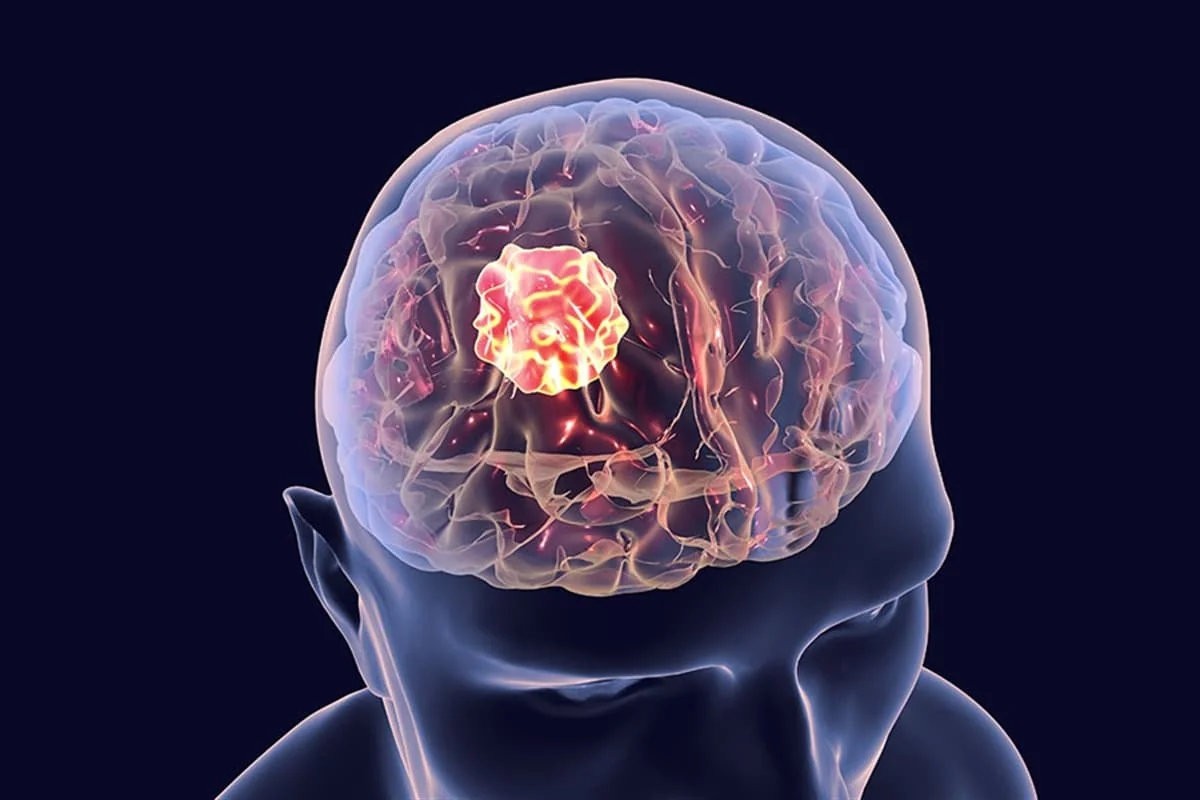
How Lung Cancer Spreads to the Brain
Lung cancer usually reaches the brain through haematogenous spread, meaning that cancer cells travel in the bloodstream. Small cell lung cancer (SCLC) has a particular tendency to spread early.
How spread occurs:
- Cancer cells separate from the tumour in the lung.
- They travel through the bloodstream to the brain.
- They settle and grow into secondary tumours, or metastases.
Brain metastases are a form of distant spread. In TNM staging, they represent stage 4 lung cancer; in the limited/extensive classification of SCLC, they indicate extensive-stage disease. Their presence affects treatment planning.
At What Stage Can Lung Cancer Spread to the Brain?
The likelihood of developing brain metastases varies with cancer type and stage:
| Stage | Description | Risk of later brain metastases |
|---|---|---|
| Stages 1–2 | Disease is confined to the lung and, in some stage groups, nearby lymph nodes. | Generally lower |
| Stage 3 | Disease is locally or regionally advanced and may involve lymph nodes. | Higher than in earlier stages, but variable |
| Stage 4 | Cancer has spread to distant sites. | Brain involvement is possible but not inevitable |
Brain metastases may occur early in SCLC, including at diagnosis or within the following months. They can also be present at diagnosis or develop later in non-small cell lung cancer (NSCLC). If brain metastases are found, the cancer is staged according to that distant spread, not the earlier stage before it was detected.
How Soon Can Lung Cancer Spread to the Brain?
The timing differs widely between patients:
- SCLC: Brain metastases may be present when the cancer is diagnosed or develop during follow-up. There is no fixed interval that applies to everyone.
- NSCLC: They can also be present at diagnosis or arise later. A fixed interval such as two to three years cannot be predicted for an individual.
Timing depends on the cancer's biology, overall disease burden and the treatment received, as well as the person's general condition.
Symptoms of Brain Metastases
Possible symptoms include the following:
1. Neurological Symptoms
- Severe or persistent headache, sometimes worse in the morning
- Confusion or altered awareness
- Muscle weakness, particularly on one side of the body
- Visual changes, including blurred or double vision
- Difficulty speaking or memory problems
2. Movement and Balance Problems
- Unsteadiness when walking or dizziness
- Difficulty with fine movements, such as holding a pen
3. Psychological and Cognitive Changes
- Depression or changes in mood
- Memory and concentration difficulties
- New personality changes
Symptoms depend on the location of the metastases and the pressure or swelling they cause.
Sudden one-sided weakness, difficulty speaking, a first seizure or a change in awareness requires emergency assessment. In Türkiye, call 112 or attend an emergency department. These symptoms may have urgent causes other than metastases; do not wait for a routine appointment.
How are brain metastases diagnosed?
Symptoms alone do not confirm the diagnosis. Assessment combines an examination with imaging, usually a contrast-enhanced brain MRI. A CT scan may be needed in an emergency or when MRI is unsuitable. A brain lesion should not automatically be assumed to be a metastasis because someone has a history of cancer; some patients need tissue sampling.
A lung nodule also does not, by itself, mean cancer or spread to the brain. Our explanation of what a lung nodule is can help you understand the term in a scan report. Lung nodule follow-up and surgery depends on its size, appearance and changes over time.
Outlook for People with Lung Cancer and Brain Metastases
There is no single answer to “How long can someone live with lung cancer that has spread to the brain?” General health, the number and size of brain lesions, disease elsewhere, molecular features and treatment response all matter.
Treatment options and disease course vary. Brain-active targeted drugs and local treatments may help control disease in eligible patients. A survival figure found online cannot predict an individual's remaining life; the treating team should discuss the person's own circumstances.
Worsening symptoms do not, by themselves, mean that death is imminent. New or worsening symptoms need assessment for treatable problems and supportive care needs.
Treatment Options for Brain Metastases
Treatment is planned with medical oncology, radiation oncology and neurosurgery. Symptoms, the brain lesions and disease elsewhere are considered together.
1. Radiotherapy
- Radiation can control or shrink brain metastases.
- Focused techniques such as stereotactic radiosurgery (SRS) may be used in suitable patients. The number, size and location of lesions influence the choice of treatment.
2. Neurosurgery
- Surgery may be considered for an accessible lesion, particularly a dominant symptomatic tumour or when tissue is needed to confirm the diagnosis, in a patient suitable for an operation.
- Radiation may be offered after surgery to improve local control.
3. Drug Treatments: Chemotherapy, Targeted Therapy and Immunotherapy
- Drug choice depends on cancer type, molecular tests, previous treatments and the person's condition.
- Eligible cancers with EGFR mutations or ALK rearrangements may be treated with targeted drugs that can also act against brain metastases.
- Immunotherapy or chemotherapy-containing treatment may be used in suitable patients. The specialist team determines the sequence of systemic and brain-directed treatments.
4. Corticosteroids and Supportive Care
- Corticosteroids may be prescribed to reduce swelling around a brain lesion and relieve symptoms.
- Pain relief and treatment for seizures are provided when needed. Anti-seizure medicine is not routinely prescribed preventively to every person who has never had a seizure.
Conclusion
The aims of treatment are to control disease, relieve symptoms and preserve quality of life. The first step is an individual plan based on imaging and pathology results.
Brain metastases do not mean that lung surgery is suitable for every patient. A thoracic surgery assessment with Prof. Dr. Kemal Karapınar can address the role of lung cancer surgery and other treatment options in your circumstances, with discussion at the thoracic oncology tumour board when needed. Treatment of the brain metastases is planned by the appropriate oncology and neurosurgery teams.
Bring any chest and brain imaging, pathology reports and details of previous treatment. You can request a consultation through the contact page for assessment of your reports.