The chest, or thorax, contains and protects the heart, lungs and other vital structures. External forces can injure these structures and cause serious health problems. Road traffic collisions, falls, blows to the chest and penetrating wounds are examples. Appropriate management helps prevent organ damage and life-threatening complications.
Related videos and posts
The linked Instagram content is in Turkish.
Causes
Chest injuries commonly result from external force. Causes include:
1. Road traffic collisions
A collision can produce a forceful impact to the chest, including contact with the vehicle interior, steering wheel or restraint systems. Seat belts and airbags greatly reduce serious injury overall, although injuries can still occur in a major collision.
2. Falls
A fall from a height or a slip may injure the chest wall or lungs. Even a lower-energy fall can be significant in an older person.
3. Workplace incidents and physical impacts
A direct impact during work or sport can cause chest trauma.
4. Penetrating wounds
Knives, bullets and other penetrating objects can damage structures inside the chest.
5. Explosions and high-energy impacts
Blast injuries and major collisions can also cause severe chest trauma.
Types
Injuries are commonly grouped according to the mechanism and severity.
1. Blunt chest trauma
An impact can damage the chest wall or internal organs without an open skin wound. Collisions and falls are common examples.
Possible injuries include:
- Lung and pleural injuries, such as pneumothorax or haemothorax
- Rib fractures
- Cardiac injury
- Diaphragm injury
2. Penetrating chest trauma
An object passes through the skin and may directly injure internal structures.
Examples include:
- Stab wounds
- Gunshot wounds
- Other penetrating-object injuries
Symptoms
Symptoms depend on the injury, but can include the following.
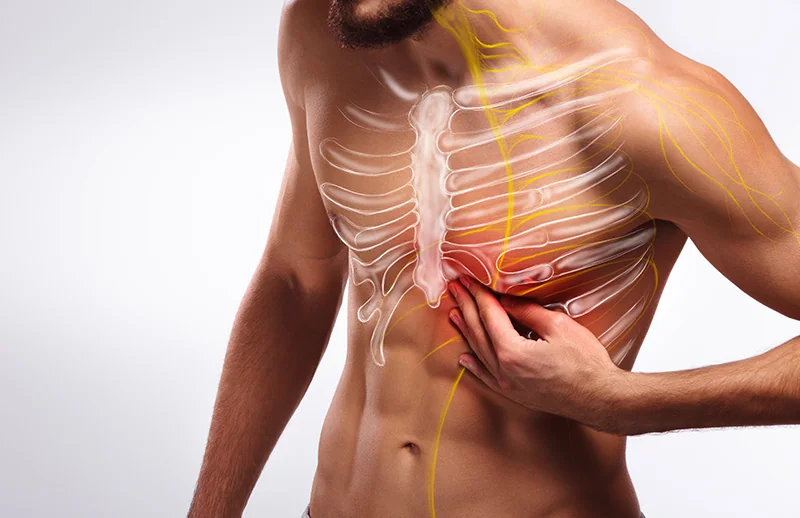
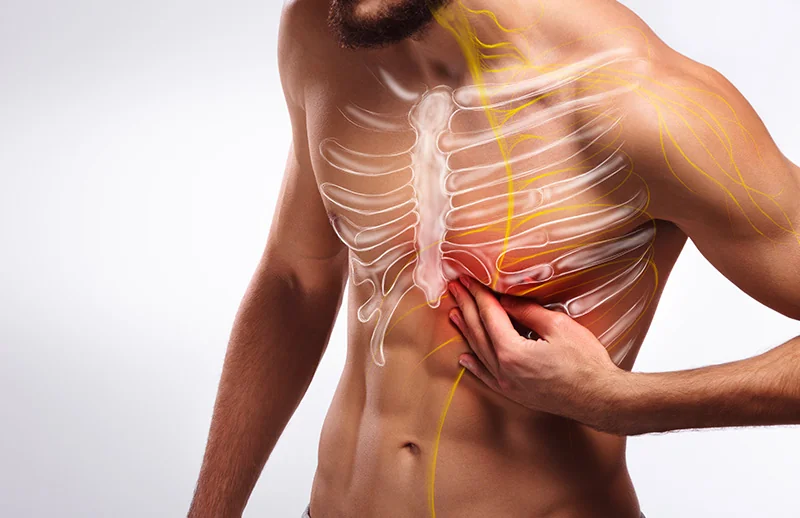
1. Pain and tenderness
Sharp chest pain may be especially noticeable with breathing, coughing or movement.
2. Breathlessness
Injury to the lungs or diaphragm can make breathing difficult.
3. Swelling and bruising
The chest wall may become swollen, bruised or visibly deformed around injured ribs.
4. Bleeding
Bleeding may be visible through a wound, appear in coughed-up sputum or occur internally without obvious external signs. Both blunt and penetrating injuries can cause internal bleeding.
5. Fainting or loss of consciousness
Severe injury, low oxygen, blood loss or an associated head injury can affect consciousness.
6. A rapid heartbeat
Pain, blood loss or injury to the heart or major vessels can produce a fast pulse.
Diagnosis
The team combines symptoms, examination and appropriate investigations to guide treatment. Life-threatening problems may require immediate treatment before full imaging.
1. Physical examination
The doctor checks for swelling, bruising, tenderness and other signs, while assessing heart rate, circulation and breathing.
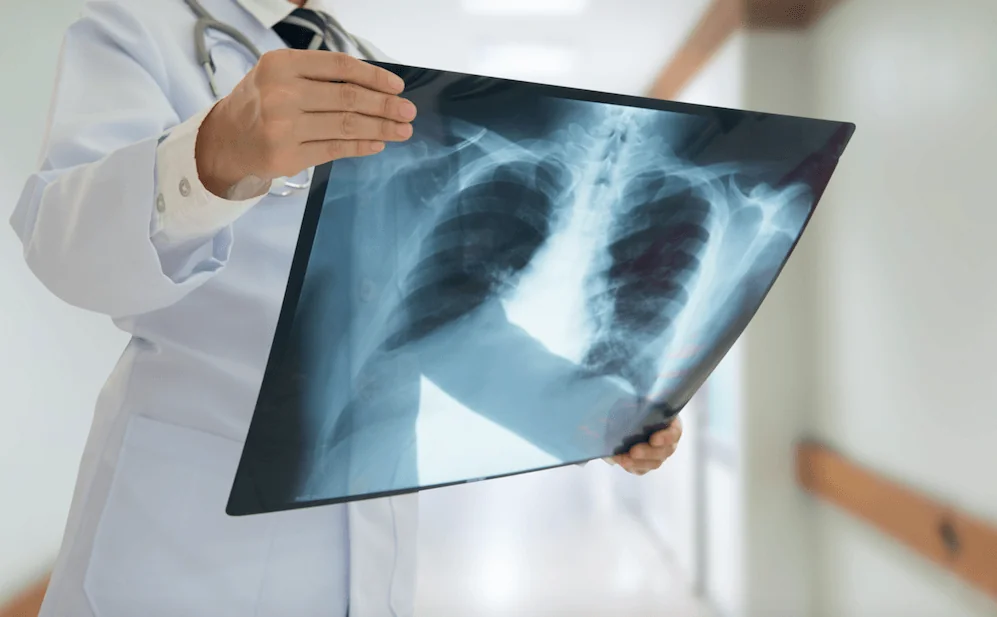
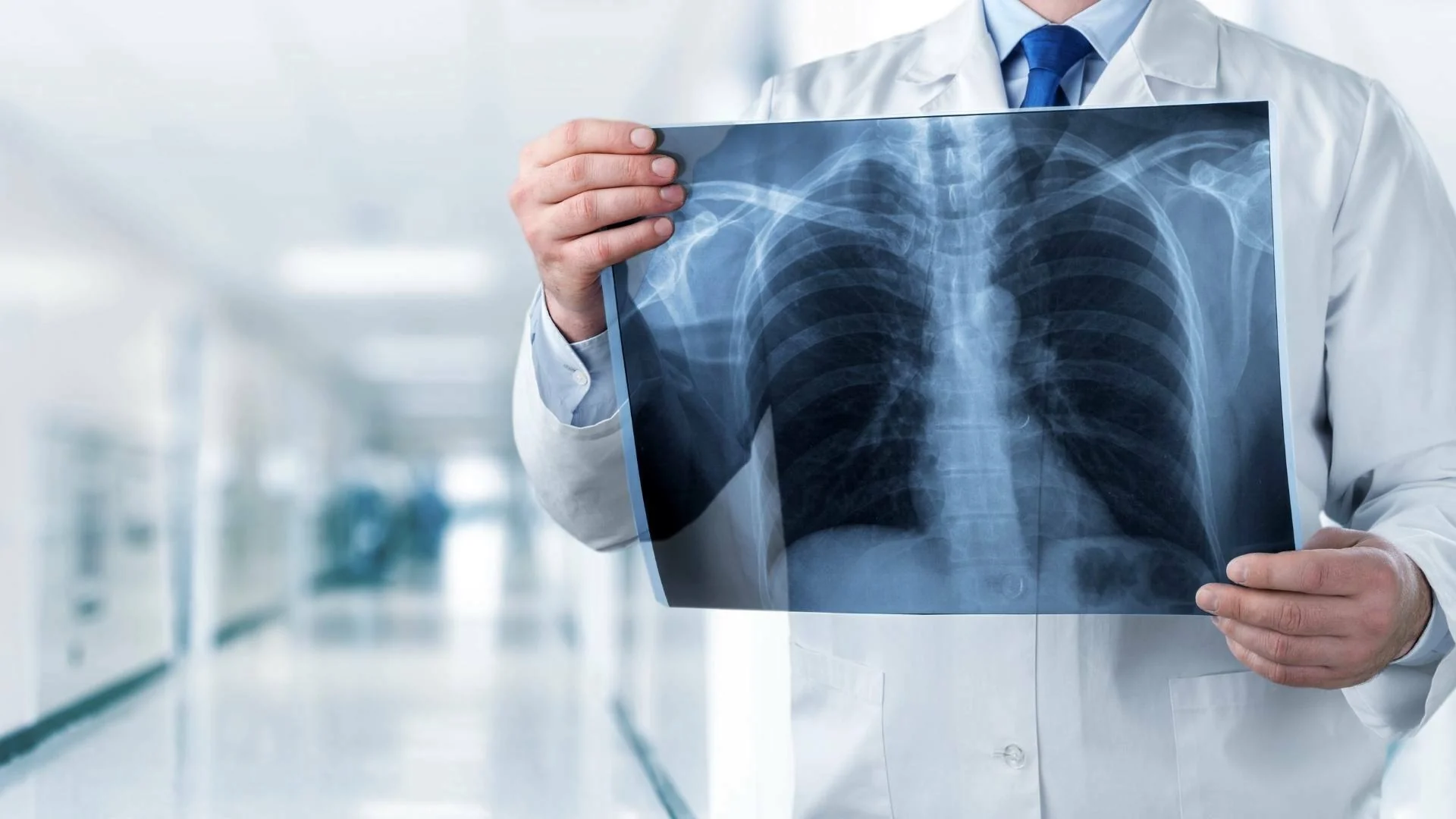
2. Chest X-ray
An X-ray can show some rib fractures, pneumothorax and blood or fluid in the chest, although it may miss certain injuries.
3. CT
CT provides more detailed information, especially in complex trauma, and can show lung injury and fractures more clearly.
4. Ultrasound
Bedside ultrasound can rapidly assess for fluid or blood and signs of pneumothorax. Pneumothorax is air, not a fluid collection.
5. Blood tests
Blood tests help assess the effects of blood loss and other organ problems. Further tests may investigate infection when clinically suspected.
Treatment
Management depends on the injury and aims to stabilise breathing and circulation, control pain and prevent complications.
1. Pain management
Adequate pain relief helps patients breathe deeply and cough effectively. Medicines may include anti-inflammatory drugs when safe, along with other pain-control techniques. Poorly controlled pain can restrict breathing and contribute to complications.
2. Breathing support
Oxygen or ventilatory support may be needed. In pneumothorax or haemothorax, removing air or blood can help the lung re-expand.
3. Procedures and surgery
Significant penetrating injury, major vessel damage, internal bleeding or serious lung injury may require surgery. A chest drain may remove pleural air or blood; not every pneumothorax or haemothorax requires an open operation.
4. Observation
Selected mild injuries can be monitored with repeated assessment. The plan changes if new symptoms or complications develop.
5. Fluids and blood products
Patients with significant blood loss may need fluids and blood transfusion to support circulation, alongside treatment to control bleeding.
Related conditions and procedures
Further reading on this topic
The following articles cover diagnosis, treatment planning and recovery in more detail.
- Recognising Chest Trauma: 7 Groups of Warning Signs
- Six Rehabilitation Steps after Chest Trauma
- Four Techniques Used to Diagnose Chest Injuries
- What Is Chest Trauma? Chest Injuries and Treatment Options in 2025
Sources and further reading
These resources provide general background on this topic; they do not replace an individual medical assessment.