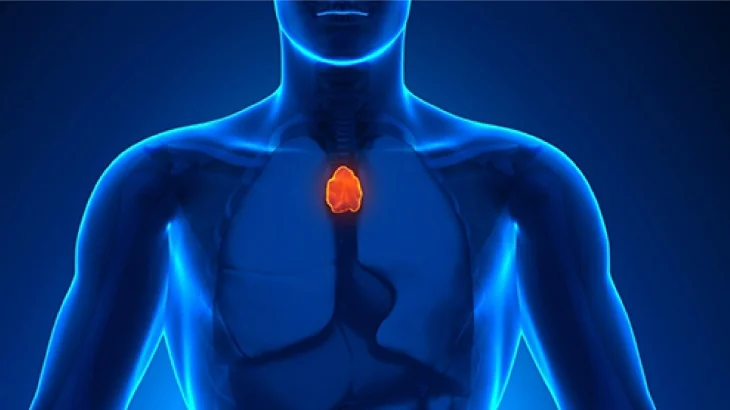
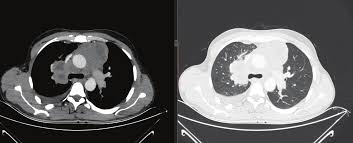
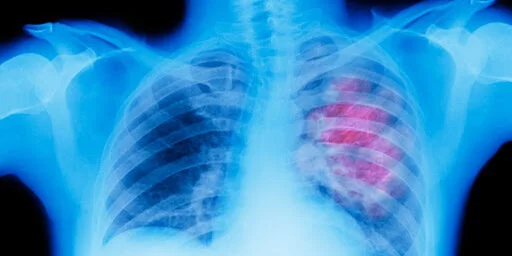
The mediastinum is the central region of the chest between the two lungs. It contains vital structures, including the heart, oesophagus, trachea (windpipe), major blood vessels, lymph nodes and nerves. Mediastinal masses arise from abnormal growth or changes in tissues in this area. Many are discovered incidentally because they cause no obvious symptoms at first. Larger masses can cause chest pain, shortness of breath or cough.
Related videos and posts
The linked Instagram content is in Turkish.
Causes of Mediastinal Masses
There are many possible causes. Some masses are benign, while others are malignant. Examples include:
Non-cancerous conditions and benign masses:
- Thymic hyperplasia: Enlargement of the thymus is not itself a cancer. It can be associated with myasthenia gravis or other conditions and needs assessment in its clinical context.
- Mediastinal lymphadenopathy: Enlarged lymph nodes may result from infection, such as tuberculosis, or inflammatory disease. Enlarged nodes can also have other causes requiring assessment.
- Dermoid cysts and teratomas: Developmental lesions that can contain fluid and other tissues. Many are benign, although not all teratomas are benign.
- Lymphangiomas: Fluid-containing lesions caused by abnormal lymphatic vessels, often recognised in childhood.
- Mediastinal lipomas: Benign tumours made of fatty tissue.
- Bronchogenic cysts: Fluid-containing developmental cysts related to the trachea and bronchi.
Malignant masses:
- Lung cancer: Tumours near the centre of the lung can involve the mediastinum.
- Hodgkin and non-Hodgkin lymphoma: These cancers of lymphatic tissue can form mediastinal masses.
- Thymomas and thymic carcinomas: Tumours arising from the thymus gland in the mediastinum have different biological behaviours; thymomas can be locally invasive, while thymic carcinoma is malignant.
- Metastatic cancer: Cancer spreading from another organ, such as the breast, kidney, colon or head and neck, can involve mediastinal structures or lymph nodes.
Symptoms of Mediastinal Masses
Many masses initially cause no clear symptoms. As a mass grows or presses on nearby tissues, symptoms may include:
- Chest pain: Pressure or involvement of chest structures can cause pain.
- Shortness of breath: Compression of the lungs or airways can make breathing difficult.
- Cough: Pressure on the trachea or bronchi can cause a persistent cough.
- Difficulty swallowing: Pressure on the oesophagus can interfere with swallowing.
- Hoarseness: Involvement of the nerves controlling the vocal cords can change the voice.
- Significant weight loss: Cancerous masses may be associated with unexplained weight loss.
- Fever and sweating: These can occur with infection or conditions such as lymphoma.
- Swelling of the face or arms: Compression of major veins can obstruct blood returning to the heart, causing swelling.
Diagnosing Mediastinal Masses
A mass may first be seen on an X-ray or CT scan performed for another reason. Tests used to assess it include:
Chest X-ray:
- An X-ray taken for respiratory symptoms can reveal a mediastinal abnormality, but further imaging is usually needed for detail.
Computed tomography (CT):
- CT shows the size, shape and location of the mass and its relationship with neighbouring organs.
Magnetic resonance imaging (MRI):
- MRI can be particularly useful for assessing relationships with blood vessels, nerves and other soft tissues.
Positron emission tomography (PET):
- PET identifies increased metabolic activity and can help assess some tumours. Infection and inflammation can also show uptake, so an active area is not automatically cancer.
Biopsy:
- Tissue sampling may be needed to establish the diagnosis. Depending on the lesion, samples can be obtained using bronchoscopy, needle biopsy or mediastinoscopy.
Endoscopic techniques:
- Endoscopic methods can help investigate masses or lymph nodes deeper in the mediastinum.
Treatment Options
Treatment depends on the type, size and location of the mass. Some benign lesions can be observed, while others require surgery. Treatments for malignant disease depend on the specific diagnosis and may include:
Surgery:
- Selected large, symptomatic or resectable cancerous masses may require removal. Thymomas and benign lesions such as bronchogenic cysts may also be treated surgically, according to their characteristics.
Chemotherapy and radiotherapy:
- These are used for particular cancerous masses to destroy cancer cells or slow their growth. Lymphoma, for example, is generally treated medically rather than by removing the mass.
Observation:
- Small, appropriately characterised benign lesions may be monitored with scans at suitable intervals.
Immunotherapy and targeted treatment:
- Selected cancers involving the mediastinum may be suitable for treatments that act on immune responses or specific tumour features. These are not appropriate for every type of mediastinal tumour.
Related conditions and procedures
Further reading on this topic
The following articles cover diagnosis, treatment planning and recovery in more detail.
- Mediastinal Widening: Causes, Symptoms and Treatment
- Preparing for Mediastinal Mass Surgery: 9 Steps
- Mediastinal Masses: 7 Questions About Symptoms, Diagnosis and Treatment
- After Mediastinal Mass Surgery: 6 Steps for Recovery and Home Care
- Five Treatment Approaches for Mediastinal Masses
- Mediastinal Masses and the Heart: Eight Possible Effects
- The Middle Mediastinum: Anatomy, Conditions and Treatment in 2025
Sources and further reading
These resources provide general background on this topic; they do not replace an individual medical assessment.