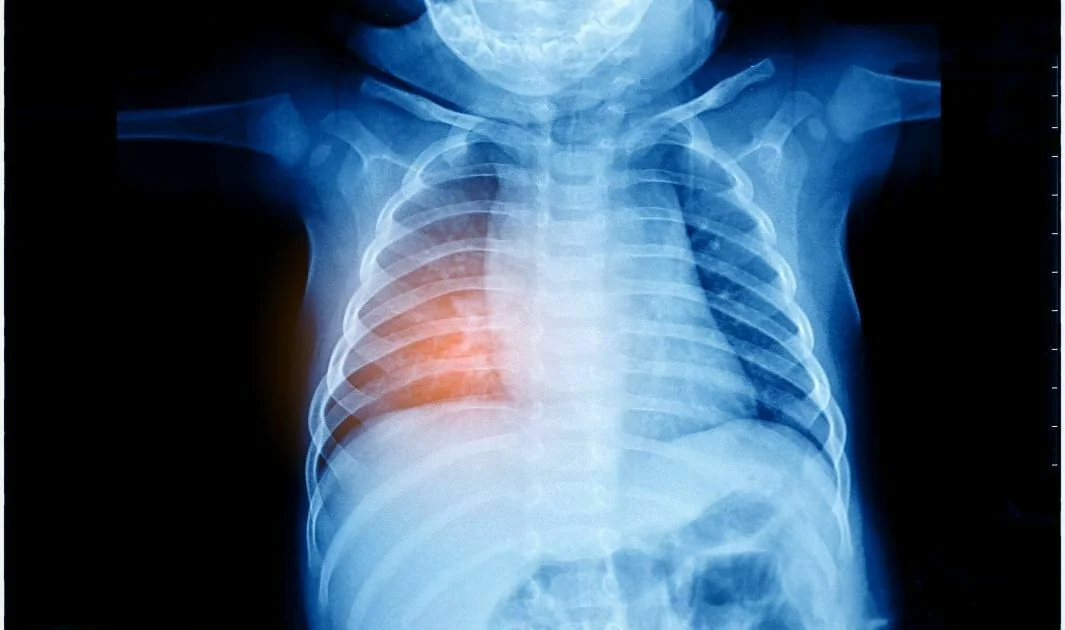
The chest wall protects the lungs, heart and other structures. It consists of bones, muscles, cartilage and connective tissue. Conditions affecting it can alter breathing, circulation or quality of life. Important examples include chest wall tumours, pigeon chest (pectus carinatum) and funnel chest (pectus excavatum). This page explains their causes, symptoms and treatment options.
Related videos and posts
The linked Instagram content is in Turkish.
1. Chest wall tumours
Chest wall tumours are abnormal growths arising in tissues such as bone, muscle or other soft tissue. They can be benign, meaning non-cancerous, or malignant, meaning cancerous. Swelling or pain may draw attention to a lesion.
Causes
- Benign tumours: Several non-cancerous tumour types can occur. Their causes vary and are often unknown. Infection or injury can also produce lumps, but these are not necessarily tumours. Many benign tumours grow slowly, although their location and size may still cause problems.
- Malignant tumours: Cancer may arise in the chest wall itself or involve it through direct spread or metastasis from another site, such as the lung or breast.
Symptoms
- Swelling or a lump in the chest wall
- Pain or tenderness
- Breathlessness or chest discomfort in some cases
- A painful lump under the skin
- Weight loss or fatigue with some malignant tumours
Treatment
- Surgery: May be needed according to the tumour type and size. Many benign tumours can be removed completely.
- Radiotherapy or chemotherapy: May be appropriate for selected malignant tumours, depending on the diagnosis and stage.
- Other medicines: Certain tumours can be treated with diagnosis-specific drug therapies.
2. Pigeon chest — pectus carinatum
Pectus carinatum causes the front of the chest to project outwards. It is a developmental chest wall condition involving the ribs and cartilage. It often becomes more noticeable in childhood and can become more pronounced during adolescence, although adults may also seek assessment.
Causes
- Inherited factors: The condition can run in families and may be associated with certain genetic disorders.
- Cartilage development: Altered growth of the rib cartilage contributes to the outward chest shape.
Symptoms
- An outward projection of the chest
- Discomfort with deep breathing or physical activity in some people
- Concerns about appearance, which may affect confidence or social activities
Treatment
- Physical therapy: May help posture, strength and comfort in mild cases, but does not by itself reliably correct the structural deformity.
- Bracing: A fitted chest brace can gradually reshape a flexible chest wall, particularly in children and adolescents.
- Surgery: May be considered for selected severe or rigid deformities or when bracing is unsuitable or unsuccessful. The technique depends on the individual anatomy.
3. Funnel chest — pectus excavatum
Pectus excavatum causes an inward depression of the front of the chest. It is a developmental condition, more commonly seen in males, involving the growth and shape of the ribs and cartilage.
Causes
- Inherited factors: Similar chest shapes may occur in several family members.
- Connective tissue disorders: Conditions such as Marfan or Ehlers-Danlos syndrome may be associated with it.
Symptoms
- A sunken appearance of the chest
- Breathlessness or difficulty exercising in some patients
- Concerns about chest appearance
- Palpitations or fatigue during activity, particularly when function is affected
Treatment
- Physical therapy: Can improve posture and muscle strength in mild cases, although it does not reliably remove the depression itself.
- Selected non-surgical devices: A vacuum bell may be offered to suitable patients to lift the depressed chest gradually. Compression bracing is primarily used for pectus carinatum and is not the usual treatment for pectus excavatum.
- Surgery: The depression can be corrected surgically when indicated. The Nuss procedure places a shaped metal bar behind the breastbone to lift it. A Ravitch procedure reshapes the chest using an open approach that may include removal of abnormal cartilage.
Related conditions and procedures
- Chest Wall Tumour Surgery
- Pectus Excavatum: Nuss Procedure and Vacuum Bell Treatment
- Pectus Carinatum (Pigeon Chest) — Brace Treatment
Further reading on this topic
The following articles cover diagnosis, treatment planning and recovery in more detail.
Sources and further reading
These resources provide general background on this topic; they do not replace an individual medical assessment.