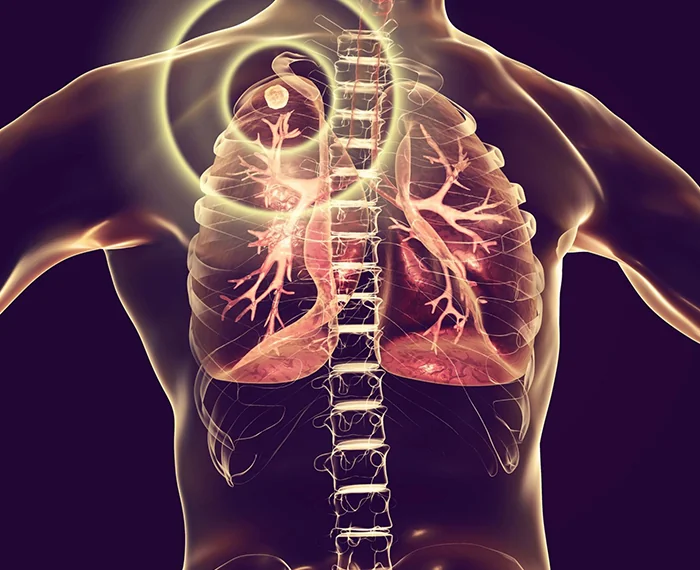
A minimally invasive lung biopsy is a procedure used to investigate abnormal lung tissue or a mass. It helps establish the cause of a lung lesion or disease while avoiding a large surgical incision. For suitable lesions, a less invasive biopsy may be considered first; a surgical biopsy may be needed if an adequate sample cannot be obtained. This article explains how the procedure is performed, when it is needed, its benefits and possible complications.
Related videos and posts
The linked Instagram content is in Turkish.
For the broader clinical context, see Lung Nodule Follow-up and Surgery.
What Is a Minimally Invasive Lung Biopsy?
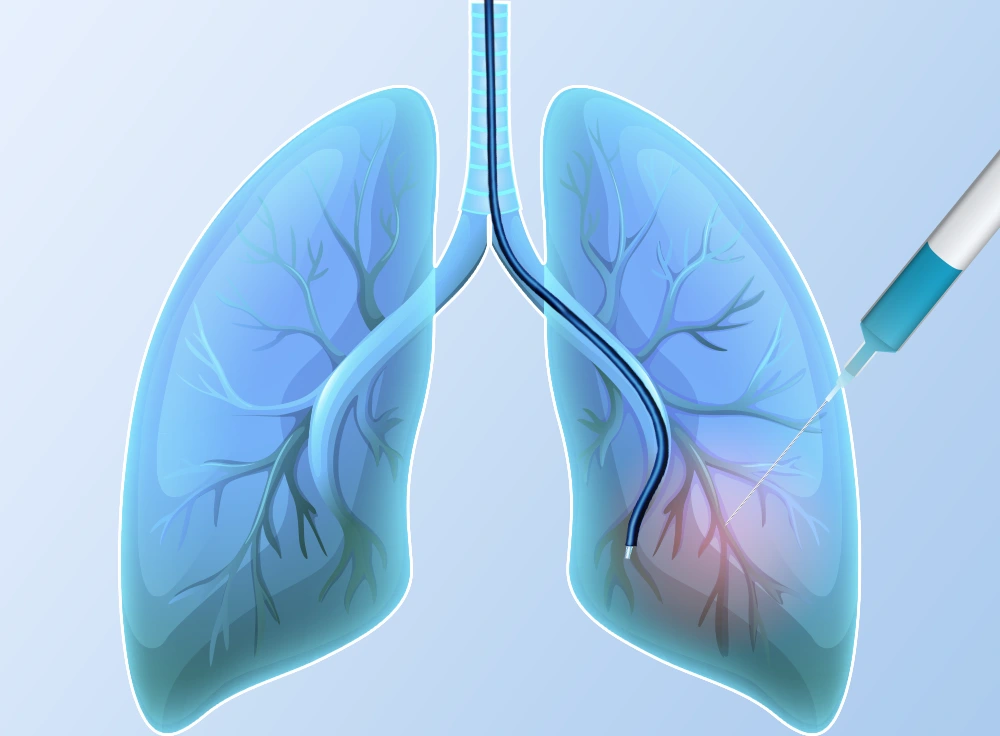
A lung biopsy takes a small sample of lung tissue for examination. Here, the term “closed” or minimally invasive biopsy generally refers to a needle procedure rather than an operation through a large incision. A needle reaches the target tissue and removes a small sample, usually under local anaesthetic, without opening the chest through a large cut.
How Is It Performed?
The procedure generally involves the following steps:
- Preparation and anaesthesia:
- Needle biopsy is usually performed under local anaesthetic. Sedation or general anaesthesia may be used in some circumstances, depending on the procedure.
- You may lie on your back or side. The skin is cleaned, and your position is adjusted for the imaging method, such as CT or ultrasound.
- Placing the needle:
- The clinician passes a small needle through the skin towards the chosen target. CT or ultrasound guidance is commonly used to help position the needle accurately. Imaging reduces, but does not eliminate, the risk of injury to nearby structures.
- Taking the tissue sample:
- The needle is directed into the abnormal tissue and a small sample is collected. It is sent to a laboratory for pathological examination.
- Completing the procedure:
- The needle is removed, and you are usually observed for several hours. Pain is often limited, although some people notice mild discomfort afterwards.
When Is a Minimally Invasive Lung Biopsy Needed?
It may be recommended in the following situations:
- A suspicious lung mass:
- A mass or lesion may be caused by cancer, infection or another condition. A tissue biopsy can help when other samples or tests have not established the diagnosis.
- Suspected lung cancer:
- A biopsy is often used to confirm the diagnosis. Tissue may be sampled in suspected early-stage cancer or suspected metastatic disease, depending on the clinical situation.
- Infection or inflammation:
- Certain infections, including tuberculosis or fungal infection, and some interstitial lung diseases may be investigated by biopsy when appropriate.
- An unexplained lesion:
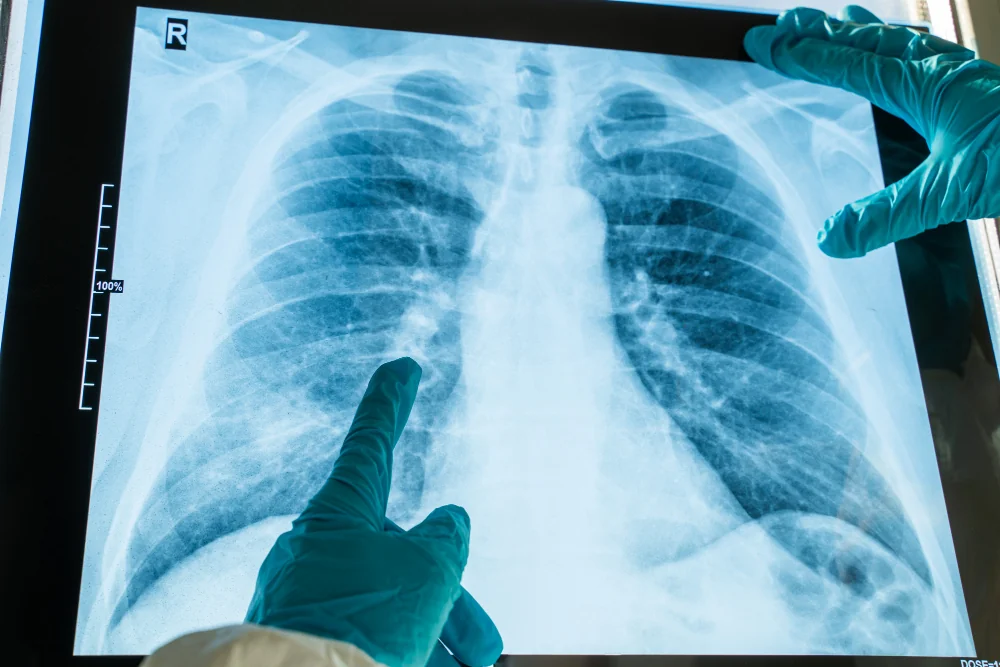
- A biopsy may clarify tissue changes whose cause remains uncertain after tests such as chest X-ray and CT.
- Unexplained pleural fluid or an associated lesion:
- A pleural biopsy may be needed to investigate unexplained fluid around a lung. Pneumothorax alone is not an indication for lung biopsy; a suspicious accompanying lesion requires its own assessment.
Benefits of a Minimally Invasive Lung Biopsy
Potential benefits include:
- A less invasive approach:
- Compared with an open surgical biopsy, a needle biopsy involves less tissue disruption and can allow a shorter recovery with fewer complications in suitable patients.
- A shorter recovery:
- Many people can leave a few hours after the procedure without an overnight stay, provided their observations and follow-up assessment are satisfactory.
- Less pain:
- Local anaesthetic and the small puncture site usually limit pain after needle biopsy.
- An earlier diagnosis:
- A suitable biopsy sample can establish a diagnosis and help the team plan treatment without unnecessary delay.
Possible Complications
Although generally a safe procedure when appropriately selected and performed, complications can occur:
- Pneumothorax (collapsed lung):
- Air may leak from the lung into the space around it, causing part of the lung to collapse. Some cases require further treatment, including a chest drain.
- Bleeding:
- Injury to small blood vessels can cause bleeding. It is often limited, but more significant bleeding can occur and needs assessment.
- Infection:
- There is a risk of infection after a skin puncture. Sterile technique reduces this risk. Antibiotics are not routinely required for everyone; the clinician decides when they are appropriate.
- Pain and discomfort:
- Mild pain or discomfort after the procedure can usually be managed with suitable pain relief.
- An inadequate sample:
- The sample may not contain enough representative tissue to establish a diagnosis. Imaging guidance helps with targeting, but a repeat biopsy or another method may still be needed.
Care and Monitoring Afterwards
Patients are usually observed for several hours after a needle biopsy. The team checks general wellbeing and watches for bleeding or pneumothorax. Pain is assessed and treated when needed. Light daily activities can generally be resumed gradually over the next few days, while strenuous activity may need to be avoided for the period advised by the treating team.
Sources and further reading
These resources provide general background on this topic; they do not replace an individual medical assessment.