
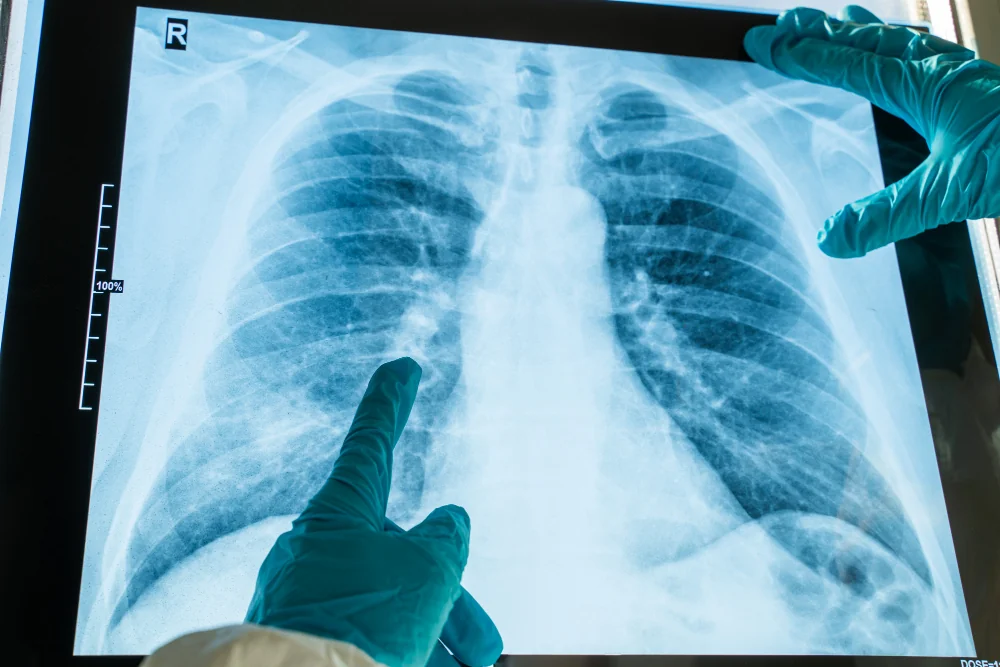
A lung biopsy is a medical procedure used to investigate the cause of an abnormal mass or nodule. Obtaining a representative tissue sample helps establish the diagnosis and plan appropriate treatment. As with any medical procedure, a lung biopsy also has possible risks.
Related videos and posts
The linked Instagram content is in Turkish.
For the broader clinical context, see Lung Nodule Follow-up and Surgery.
Contents
What Is a Lung Biopsy?
A lung biopsy removes a small tissue sample for laboratory examination. It may be performed with a needle through the skin, through a bronchoscope passed into the airways, or by surgery. The choice depends on the location of the abnormal tissue, the suspected diagnosis and the patient's health.
What Are the Risks of a Lung Biopsy?
The possible risks should be considered for each patient. Surgical biopsy usually requires general anaesthesia, which has its own risks. Possible complications during or after a surgical biopsy include:
- Bleeding and blood clots: Bleeding can occur at the biopsy site. Operations and reduced mobility can also increase the risk of clots in blood vessels.
- Infection: Infection may occur after a procedure and require treatment.
- Pain and tenderness: Discomfort, tenderness and pain can occur at the procedure site.
- Pneumonia: A chest infection can develop after surgery.
Needle and transbronchial biopsy are less invasive. They usually use local anaesthetic, sometimes with sedation; the exact plan depends on the method. Their possible complications include:
- Pneumothorax (collapsed lung): An air leak into the space around the lung can cause it to collapse. Some cases need a chest drain.
- Bleeding in the lung: Sampling may cause bleeding, including blood in the sputum.
- Infection: There is a risk of infection, although it is uncommon after a needle biopsy performed with sterile technique.
What Are the Benefits of a Lung Biopsy?
A biopsy can be important for making an accurate diagnosis and selecting treatment. Less invasive options, such as needle biopsy, may allow a faster recovery and earlier return to usual activities than a surgical biopsy, when they can provide the information needed.
Care After a Lung Biopsy
Rest as advised and avoid strenuous activity for the period recommended by the treating team. Some pain or tenderness is possible and often improves over the following days. Contact the team if pain persists or worsens. New breathlessness, significant coughing of blood, severe chest pain or feeling acutely unwell requires prompt medical assessment.
How Long Do Lung Biopsy Results Take?
A lung biopsy investigates abnormal tissue and helps the team plan treatment. The laboratory processing and examination of the sample are important factors in how soon results become available.
The Reporting Process
The time required varies. Pathological examination may take several days to several weeks, depending on the sample and the tests needed. Routine results can be available within days, while more complex analyses, including molecular tests, may take longer. Next-generation sequencing (NGS) may take around 10–12 days in some laboratories and two-and-a-half to three weeks or longer in others; these are examples rather than guaranteed reporting times.
Factors Affecting the Time Needed
The reporting time can depend on:
- The tissue sample: Its type, size and complexity may affect the work needed.
- Laboratory workload: Capacity and the number of samples being processed can affect timing.
- Additional tests: Special stains, further expert review or molecular tests may extend the process.
When Will I Receive the Results?
Timing depends on the biopsy method and the analyses required. Routine findings may be ready within a few days; molecular testing can take longer. As an example, NGS may take around 10–12 days in some services but two-and-a-half to three weeks or longer in others. Ask the treating team when to expect an update in your case.
Frequently Asked Questions
How long do lung biopsy results take?
It depends on the biopsy and the tests required. Routine results may be available in days, while molecular or other specialised analyses can take longer.
Why might the results be delayed?
Reasons include laboratory workload, a complex or limited tissue sample, and the need for additional tests or review.
How will I be told when the results are ready?
Your team will explain how results are communicated and arrange an appointment to discuss what they mean and the next steps.
Can treatment start before the results are ready?
For planned cancer treatment, a confirmed diagnosis and the necessary test results are usually important before choosing treatment. An urgent clinical problem may require treatment before all results are available; the team decides this according to the situation.
What happens if the biopsy does not provide a result?
The doctor may recommend further tests, a repeat sample or a different biopsy method to obtain the information needed.
Conclusion
Lung biopsy reporting times vary. Results commonly take several days to several weeks, depending on the investigations needed. The treating team can give the most useful estimate for your particular sample.
Sources and further reading
These resources provide general background on this topic; they do not replace an individual medical assessment.