
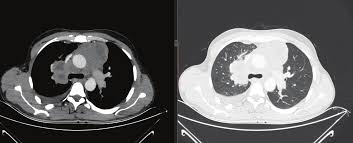
Mediastinal masses are abnormal growths in the central compartment of the chest, between the lungs. They can be benign cysts or malignant tumours. Because they lie close to the heart, major blood vessels and windpipe, they require careful assessment. Many people look for answers to questions such as “What are mediastinal masses?” and “How are they treated?” This article explains their causes, symptoms and treatment options. An individual plan, developed with an experienced specialist such as Prof. Dr. Kemal Karapınar and the relevant multidisciplinary team, aims to control disease and protect quality of life.
Related videos and posts
The linked Instagram content is in Turkish.
For the broader clinical context, see Mediastinal Masses and Mediastinal Surgery.
The mediastinum extends between the breastbone and spine. Masses in this area include thymoma, lymphoma, teratoma and other germ-cell tumours, bronchogenic cysts and pericardial cysts. They can occur at any age; the likely type varies with age and location rather than a single 30–50-year age range applying to every mass. Their causes also vary: developmental abnormalities, tumour-related changes, infection and inflammatory conditions may be relevant. Symptoms depend on size and position and can include chest pain, breathlessness, cough, difficulty swallowing, hoarseness, weight loss or fever. Some masses cause no symptoms and are found incidentally on imaging.
Investigations usually start with imaging. Chest X-ray, CT, MRI and, in selected situations, PET help assess location, size and structure. A biopsy may establish the diagnosis when it will guide treatment, using a needle, an endoscopic technique or surgery. It is not essential before treatment for every mass: a potentially completely resectable suspected thymoma, for example, may proceed directly to surgery. The safest appropriate diagnostic method depends on the individual findings. The five approaches below are adapted to tumour type, stage, symptoms and general health.
1. Surgical Treatment
Surgery is an important option for selected mediastinal masses, particularly when complete removal is appropriate and feasible. It may be used for thymoma, teratoma or some cysts. Not every mass needs surgery, and partial removal is not an equivalent goal for every tumour type.
The process starts with assessment of the patient and the relationship between the mass and nearby structures. Under general anaesthesia, the surgeon may use open surgery, video-assisted thoracic surgery (VATS) or robotic assistance. VATS uses small incisions and may support a quicker recovery in suitable patients. Robotic instruments provide controlled, articulated movements, but do not eliminate the possibility of injury. Potential benefits include obtaining tissue for pathology, relieving compression and achieving tumour control when complete removal is possible. Proximity to major vessels and airways can increase complexity and risk, making experienced surgical care important.
Prof. Dr. Kemal Karapınar uses a patient-centred approach to preparation and follow-up. Hospital stay and rehabilitation vary with the operation and recovery. Surgery can provide lasting benefit for suitable benign lesions and selected tumours, but long-term results depend on the diagnosis and extent of disease.
2. Radiotherapy
Radiotherapy uses high-energy radiation to damage tumour cells. It has a role in selected mediastinal tumours, including some lymphomas and thymic tumours. It may be used after surgery, as part of combined treatment or when an operation is unsuitable, according to the specific diagnosis.
Planning usually involves CT-based imaging to define the target and protect nearby organs. Techniques such as intensity-modulated radiotherapy (IMRT) can shape the dose more precisely. A course may involve treatment on weekdays over several weeks, but the number of sessions is individual, not always four to six weeks. Benefits can include tumour control and relief of pressure symptoms without an operation. Possible adverse effects include fatigue, skin changes, swallowing difficulty and effects on nearby organs; some can be persistent or delayed and need appropriate monitoring.
Radiotherapy is integrated into the individual plan by the relevant oncology and surgical teams. Combining it with other treatments may be appropriate for particular tumour types, but is not automatically better for every mass.
3. Chemotherapy
Chemotherapy uses medicines that act throughout the body. It is important in conditions such as lymphoma, malignant germ-cell tumours and some other cancers involving the mediastinum. Depending on the diagnosis, it may be the main treatment, be given before surgery to improve operability or be used after surgery.
Medicines are often given intravenously in cycles, with blood tests and clinical monitoring. The interval and number of cycles depend on the regimen. A systemic approach can treat disease outside the visible mass as well as the mass itself. Adverse effects can include nausea, hair loss, reduced blood counts and increased infection risk. Supportive treatment helps manage these effects but does not eliminate them.
The most suitable regimen is selected by the oncology team as part of multidisciplinary care. Clear communication and follow-up support the patient's treatment journey.
4. Targeted Treatments and Immunotherapy
Targeted medicines act on particular molecular features or pathways in some cancers. Immunotherapy can help the immune system recognise and attack certain tumour cells. Their use depends on the precise tumour type and evidence for that treatment; they are not routine options for every mediastinal mass. In thymoma, immune-checkpoint inhibitors can cause serious autoimmune complications and are not a standard general treatment.
Assessment may include tumour testing when it is relevant to the diagnosis. Medicines may be taken orally or given by infusion or injection, depending on the regimen. Personalised selection can offer benefit in suitable cancers, but these treatments do not always have fewer side effects than chemotherapy, and immune-related toxicity can be severe. The specialist team discusses likely benefits, alternatives and risks.
5. Surveillance and Supportive Care
For selected benign-appearing, asymptomatic lesions, surveillance may be appropriate. Imaging is used at an individual interval to look for change. Whether observation is safe depends on diagnostic confidence, the lesion's features and the risks of future complications. Supportive care addresses symptoms through measures such as pain relief, appropriate breathing exercises or nutritional support.
This approach can avoid an unnecessary procedure while preserving quality of life. The patient should understand why observation is being recommended, what follow-up is needed and which symptoms to report.
Frequently Asked Questions
Here are common questions about mediastinal masses:
- What are they and what causes them? They are abnormal lesions in the central chest compartment. Causes differ by diagnosis and can include developmental cysts, several tumour types, infection or inflammatory conditions.
- What symptoms can they cause? Chest pain, breathlessness, cough and difficulty swallowing are possible, although some cause no symptoms.
- How are they diagnosed? Imaging, particularly CT, helps characterise the lesion. MRI, PET or tissue sampling is added when appropriate; biopsy is not mandatory before treatment in every case.
- Can they be treated? Many have effective treatment options, but the expected result depends on the diagnosis, stage and the patient's health. A universal high success rate cannot be promised.
- How long does surgery take? It may take several hours, with recovery over weeks or longer. A fixed two-to-four-hour operation or recovery period does not apply to all procedures.
- What are the side effects of radiotherapy? Fatigue, skin changes and swallowing discomfort may occur. Other effects depend on the treated area; some can be delayed or persistent.
- How many chemotherapy cycles are needed? The diagnosis, regimen and treatment response determine the course; four to six cycles is not a rule for every patient.
- Do benign masses need treatment? Some can be monitored, while others need treatment because of symptoms, growth, complications or uncertainty about the diagnosis.
- Can they recur? Yes. Risk depends on pathology, stage and completeness of treatment. Follow-up is tailored accordingly.
- What matters after treatment? Attend follow-up, report new symptoms and follow the advice from the treating team about activity and general health.
Conclusion
Surgery, radiotherapy, chemotherapy, selected targeted or immune treatments, and surveillance or supportive care each have a role in particular mediastinal conditions. Accurate diagnosis and individual selection are essential: these approaches are not interchangeable or appropriate for every mass. Prof. Dr. Kemal Karapınar's care is supported by multidisciplinary assessment and informed discussion with patients. Timely evaluation helps establish which treatment, if any, is needed.
Sources and further reading
These resources provide general background on this topic; they do not replace an individual medical assessment.