
A solitary pulmonary nodule (SPN) is a single round or oval lesion in the lung measuring 3 cm or less. It is often found by chance and may be benign (non-cancerous) or malignant (cancerous).
Related videos and posts
The linked Instagram content is in Turkish.
How are monitoring, biopsy and surgery considered for a lung nodule?
For the broader clinical context, see Lung Nodule Follow-up and Surgery.
This article looks at what a solitary pulmonary nodule is, why it develops, how it is investigated and the possible treatments.
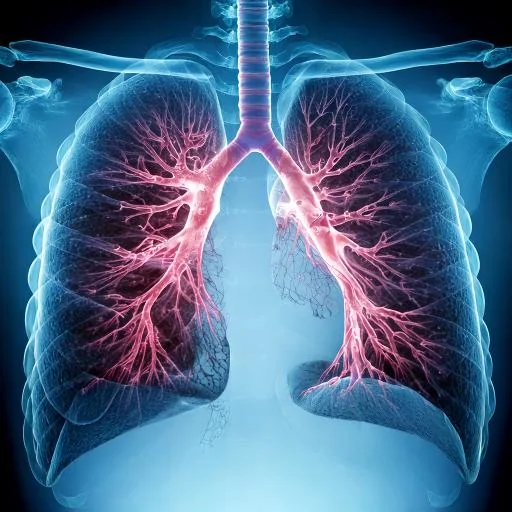
Solitary pulmonary nodule
- 1. What Is a Solitary Pulmonary Nodule?
- 2. What Causes a Solitary Pulmonary Nodule?
- 3. Symptoms
- 4. Diagnostic Tests
- 5. Treatment
- 6. Can a Nodule Turn into Cancer?
- Frequently Asked Questions
1. What Is a Solitary Pulmonary Nodule?
A solitary pulmonary nodule is a single round or oval spot in the lung, up to 3 cm across.
It may be found incidentally on a chest X-ray or computed tomography (CT) scan. It usually causes no symptoms, so many people first learn about it during imaging for another reason.
Nodules can be benign or malignant:
- Benign nodules: These may result from infection, inflammation or previous lung injury.
- Malignant nodules: These may be a primary lung cancer or cancer that has spread from another site.
What Is the Risk of Cancer?
| Factor | Effect on cancer risk |
|---|---|
| Age, particularly older age | Risk increases |
| Smoking | Risk increases |
| Family history of lung cancer | May increase risk |
| Larger nodule size, for example over 2 cm | Risk increases |
| Irregular nodule margins | May increase risk |
| Calcification | Certain typical patterns favour a benign cause; not all calcification excludes cancer |
2. What Causes a Solitary Pulmonary Nodule?
Solitary pulmonary nodules can develop for several reasons:
Benign Causes
- Previous infection: Scarring after tuberculosis or pneumonia.
- Inflammatory conditions: Conditions such as sarcoidosis.
- Hamartoma: A common benign lung tumour.
- Granuloma: A localised response to infection or inflammation.
Malignant Causes
- Primary lung cancer: Cancer that starts in the lung.
- Metastatic cancer: Cancer that has spread to the lung from another part of the body.
3. Symptoms
A nodule usually does not cause symptoms and is found incidentally. Symptoms that may accompany a lung condition include:
- Persistent cough
- Shortness of breath
- Blood in sputum (haemoptysis)
- Chest pain
- Wheezing
- Unexplained weight loss
Important: These symptoms are not specific to cancer, and a small nodule may cause no symptoms even if it is malignant. Seek medical assessment if such symptoms occur.
4. Diagnostic Tests
Common investigations include:
1. Chest X-ray
- Nodules may be seen on an X-ray or CT; CT is more sensitive for small nodules.
- An X-ray alone usually cannot describe the nodule in enough detail to establish its cause.
2. CT Scan
- CT assesses size, shape, margins and calcification.
- Irregularity or growth may raise concern for cancer, although neither feature alone proves the diagnosis.
3. PET-CT
- Many cancers use more glucose, and PET can identify increased metabolic activity.
- PET-CT helps assess cancer risk but is not a definitive test. Infection can also show uptake, while small or less metabolically active cancers may show little or no uptake.
4. Biopsy
- A biopsy may be considered when the cancer risk and clinical situation make tissue sampling appropriate.
- A needle biopsy or bronchoscopy may obtain a sample for pathological examination.
5. Monitoring
- CT follow-up depends on size, nodule type and individual risk. Some very small, low-risk nodules need no follow-up.
- Growth or a change in appearance can lead to further tests.
5. How Is a Solitary Pulmonary Nodule Treated?
Management depends on whether the nodule is benign or malignant, how certain the diagnosis is and the individual's overall situation.
A) Benign Nodules
- A small, stable nodule with a confidently benign appearance may need no treatment.
- Where follow-up is needed, CT timing follows the relevant guideline and individual risk assessment.
- A proven infection is treated according to its cause. Corticosteroids do not treat infection; they are used only for selected diagnosed inflammatory conditions under medical supervision.
B) Malignant Nodules
If a nodule is lung cancer or a metastasis, treatment options may include:
1. Surgery
- Lobectomy: Removal of a lung lobe.
- Segmentectomy: Removal of an anatomical segment for selected smaller tumours.
- Pneumonectomy: Removal of an entire lung in selected patients whose tumour cannot be removed adequately by a smaller resection. It is not routine treatment for a small nodule or every advanced cancer.
2. Chemotherapy
- It may be offered according to the cancer type and stage.
- It is widely used in small cell lung cancer (SCLC).
3. Radiotherapy
- Radiotherapy may be an option when surgery is unsuitable or in other selected settings according to stage and the risk of recurrence.
4. Targeted Therapy and Immunotherapy
- Targeted drugs may be used for eligible cancers with changes such as EGFR mutations or ALK rearrangements. Immunotherapy is selected using the cancer's features and treatment setting.
6. Can a Solitary Pulmonary Nodule Turn into Cancer?
- A benign nodule generally does not turn into cancer.
- A nodule that is already malignant may progress if it is not diagnosed and managed.
- Appropriate follow-up and timely diagnosis help guide treatment; they do not guarantee a particular outcome.
Frequently Asked Questions
1. Is a solitary pulmonary nodule dangerous?
Many nodules are benign, but some are malignant. The need for CT monitoring is determined by the nodule's features and individual risk.
2. What happens if the nodule grows?
Growth increases concern and may lead to further investigation, including a biopsy when appropriate.
3. Is a nodule more likely to be cancer in a smoker?
Yes. Smoking increases the likelihood that a lung nodule is malignant, although it is only one part of the assessment.
4. Does a solitary pulmonary nodule need surgery?
Surgery may be needed when cancer is suspected or confirmed. Observation is often sufficient for low-risk or benign nodules.
Although many solitary pulmonary nodules are benign, some carry a cancer risk. You can contact us for further information and an individual assessment.
Sources and further reading
These resources provide general background on this topic; they do not replace an individual medical assessment.