
People diagnosed with lung cancer and their families often have similar questions: “Can I have surgery?”, “Should I receive medicines first?”, “Do I need radiotherapy?” The answers depend on both the features of the cancer and the person's overall health.
I work at Medipol Acıbadem District Hospital in Kadıköy, on Istanbul's Asian side, and Medipol Mega University Hospital in Bağcılar, on the European side. At both hospitals, I serve on the multidisciplinary thoracic tumour boards as a thoracic surgeon, contributing to the assessment of patients' treatment plans. These boards meet periodically, bringing together knowledge and experience from different specialties.
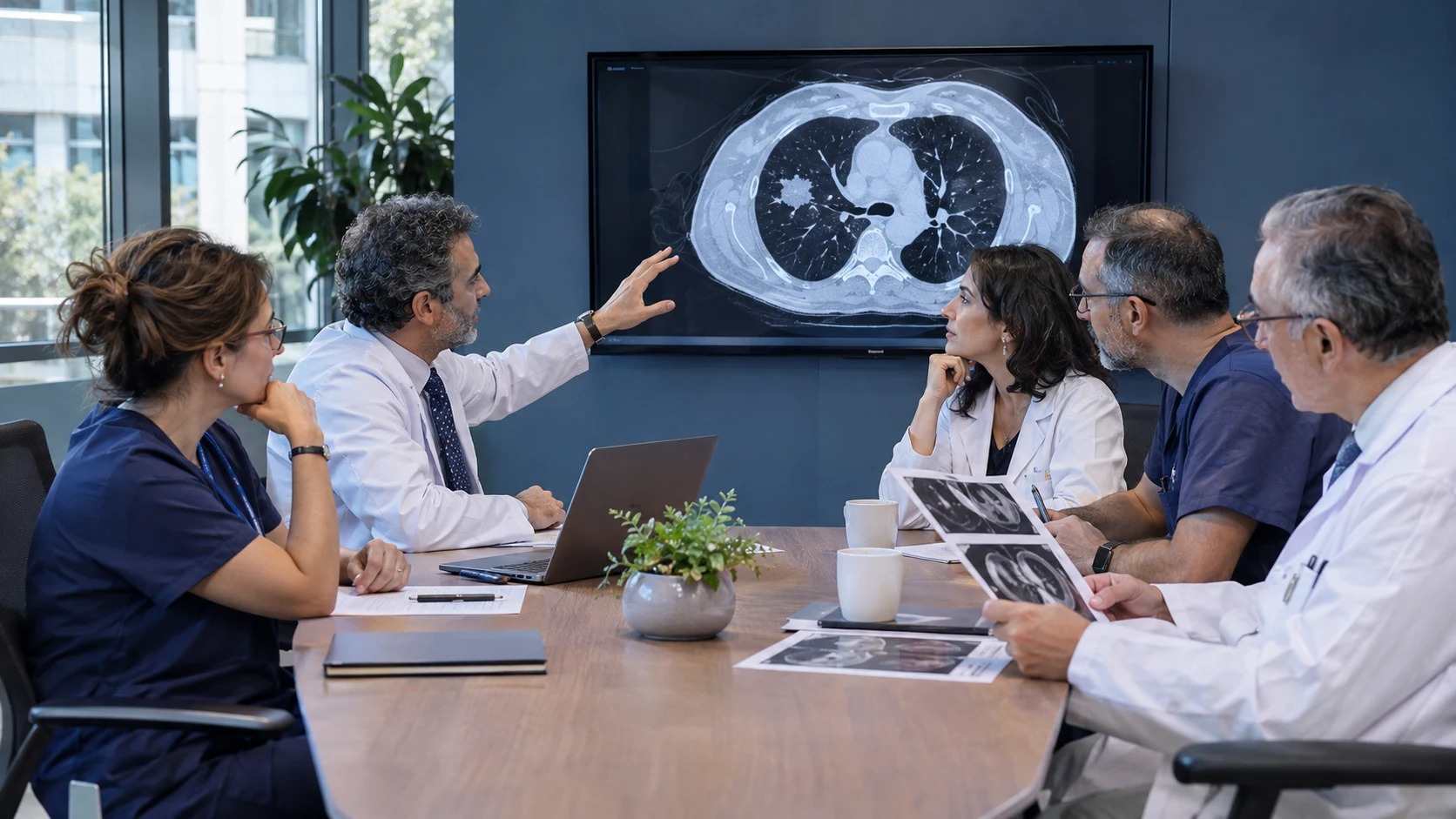
What is a thoracic tumour board?
“Multidisciplinary” means that different medical specialties work together. A thoracic tumour board is a meeting at which specialists discuss cancers within the chest, particularly lung cancer.
The boards I belong to include specialists in Medical Oncology, Radiation Oncology, Respiratory Medicine, Thoracic Surgery, Interventional Radiology, Radiology and Nuclear Medicine. Each specialty contributes its own perspective on the patient's condition.
International guidance recommends multidisciplinary assessment for people with suspected lung cancer. When treatment may involve a combination of approaches, involving thoracic surgery in planning is particularly important.
What information do we assess together?
Planning treatment involves more than the size of a lung mass. Imaging, biopsy and pathology results, the extent of the cancer, lung function and other medical conditions all matter. In appropriate patients, the tumour's molecular features may also help determine treatment options.
For one person, the main question may be whether surgery is suitable. For another, an additional biopsy may first be needed to clarify the diagnosis or cancer stage. Treatment options for non-small cell lung cancer depend on these findings. For background information, see lung cancer, treatment and surgery.
Surgery, medicines or radiotherapy?
These treatments are not always alternatives to one another. Surgery may come first for some patients, while others may receive medicines before or after an operation. For other patients, radiotherapy and systemic treatments may take priority.
The use and timing of chemotherapy, immunotherapy and targeted medicines depend on the cancer stage, tumour features and the person's ability to tolerate treatment. The same sequence does not apply to everyone. Surgery after neoadjuvant treatment, meaning treatment given before an operation may form part of the plan for suitable patients.
An important contribution of the board is considering these options as connected parts of a treatment plan rather than as separate decisions.
How does this collaboration strengthen the contribution of surgery?
As a thoracic surgeon, I value participation in the board because it helps us assess where surgery may contribute, for which patient and at what point in treatment.
For me, strengthening the contribution of surgery does not mean recommending an operation to more people. It means assessing more comprehensively who may benefit, when surgery may be appropriate and how it can be combined with other treatments.
Our aim is to develop a plan centred on the patient's needs, informed by modern medicine and scientific developments.
What should you bring for assessment?
If available, bring the following records so that the assessment can be more focused:
- Chest CT and PET-CT images and reports
- Any biopsy result from the lung mass or lymph nodes
- Lung-function test results and important cardiac assessments
- Summaries of previous chemotherapy, immunotherapy or radiotherapy
- An up-to-date list of your medicines
These records help us consider whether surgery may be appropriate, whether another treatment should come first, or whether an additional or repeat biopsy is needed to clarify the diagnosis and stage. If you have a lung nodule or mass without a confirmed diagnosis, see the steps described in lung nodule follow-up and surgery.
A tumour-board recommendation does not replace an examination and a discussion with the patient. To review a lung mass and any biopsy result, and to discuss whether another biopsy or surgery may be appropriate, use the contact page for appointment and hospital-location information.
The patient's views are part of the treatment plan
A tumour board discussion does not replace a conversation with the patient. The purpose, possible benefits, risks and alternatives of the proposed approach should be explained, and the person's expectations and preferences should be included in decision-making.
Multidisciplinary assessment brings different perspectives together, but it cannot guarantee the success of a particular treatment. The plan may be reconsidered as new results become available and in response to treatment.
If you are being assessed for suspected or diagnosed lung cancer, consult Respiratory Medicine and Thoracic Surgery specialists to discuss appropriate investigations and treatment options. You can read about my biography and professional experience and visit the contact page for appointments and directions to both hospitals.
For consultation details and what to bring, see which doctor to consult about lung cancer surgery in Istanbul.