
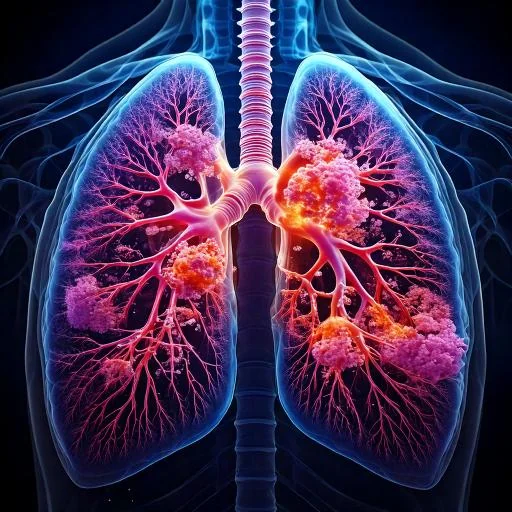
Lung cancer develops when abnormal cells grow uncontrollably in lung tissue. A 6 cm lung mass is an important finding, but its size is only one part of assessing the diagnosis and possible extent of disease.
For the broader clinical context, see Lung Cancer: Symptoms, Treatment and Surgery.
This article explains what a 6 cm mass may mean in lung cancer, how staging is established and which treatments may be considered.
Contents
- 1. What does a 6 cm mass mean?
- 2. What stage could it be?
- 3. Possible symptoms
- 4. Treatment options
- 5. Outlook
- 6. Reducing risk
- Frequently asked questions
1. What does a 6 cm mass mean?
A lung mass is not always cancer. Benign growths, infection and other conditions can also produce an abnormal area. However, a 6 cm mass is large and warrants prompt investigation because malignancy is an important concern.
How size contributes to assessment:
| Size | Meaning and assessment |
|---|---|
| Up to 3 cm | Usually described as a nodule; it may be benign or malignant, and size alone does not establish the stage |
| More than 3–5 cm | Described as a mass; cancer must be investigated, with tissue sampling considered according to the clinical plan |
| More than 5 cm | A larger mass that requires detailed assessment; the full cancer stage cannot be inferred from size alone |
If confirmed as NSCLC, a 6 cm tumour may be stage 2B, stage 3 or stage 4, depending on its other features, lymph nodes and any metastatic spread.
2. What stage could it be?
Lung cancer staging considers both the primary tumour and the extent of spread.
The TNM system
- T — primary tumour: A 6 cm tumour is usually T3 by size, unless another feature places it in a higher T category.
- N — lymph nodes: Describes which regional lymph nodes contain cancer.
- M — metastases: Describes metastatic spread.
| Stage | General description | Possible situation for a 6 cm tumour |
|---|---|---|
| 2B | T3 tumour without regional nodal or metastatic spread | A 6 cm tumour with N0 and M0 findings |
| 3 | Regional spread or other locally advanced features, without distant metastases | Stage depends on the specific lymph nodes and other structures involved |
| 4 | Metastatic disease | Spread to sites such as brain, liver or bone, or another qualifying metastatic pattern |
A 6 cm measurement therefore does not establish a single stage or exclude stage 4. PET-CT, tissue sampling and other appropriate tests are used to complete staging.
3. Possible symptoms
A larger mass may affect nearby structures and cause:
- A persistent cough
- Blood in sputum, called haemoptysis
- Breathlessness or wheezing
- Chest, back or shoulder pain
- Unexplained weight loss or poor appetite
- Hoarseness or difficulty swallowing
- Repeated pneumonia or bronchitis
Persistent or concerning symptoms should be assessed promptly.
4. Treatment options
The plan depends on the diagnosis, full stage, general health and cancer type.
a) Surgery
- Surgery may be appropriate if the tumour is removable and the patient is fit enough. Absence of nodal spread can favour this option, but selected patients with involved lymph nodes may also be considered after multidisciplinary review.
- Lobectomy: Removal of the affected lung lobe.
- Pneumonectomy: Removal of an entire lung when necessary.
b) Chemotherapy
- May be used before or after surgery, including when lymph nodes are involved or other risk features warrant it.
- Can also help control metastatic disease and extend survival.
c) Radiotherapy
- An option when surgery is not suitable, or in other selected combined treatment plans.
- Can shrink or control a tumour and relieve symptoms.
d) Immunotherapy and targeted treatments
- PD-L1 is a protein marker, not a genetic mutation. Its expression can guide immunotherapy decisions alongside other factors.
- EGFR mutations and ALK rearrangements are examples of tumour changes that can guide targeted treatment.
- Immunotherapy supports immune recognition of cancer; targeted medicines act on particular tumour pathways. They are different treatment classes.
5. Outlook
Survival depends on the complete stage, tumour biology, general health and response to treatment. A 6 cm size alone cannot predict life expectancy.
| Stage | How to interpret the outlook |
|---|---|
| 2B | Treatment with curative intent may be possible in suitable patients |
| 3A | Outlook and treatment vary with nodal involvement, resectability and response |
| 3B | Combined treatments may provide disease control; individual assessment is essential |
| 4 | Modern systemic treatments can improve survival in eligible patients, with wide variation in response |
Published survival figures depend on the population, staging edition and treatment era. They are not personal predictions. Timely diagnosis and appropriate treatment can improve the outlook.
6. Reducing risk
- Do not smoke, or seek support to stop.
- Reduce avoidable air pollution and harmful occupational exposures.
- Maintain a balanced diet and appropriate physical activity.
- Discuss screening eligibility with a clinician, rather than arranging routine scans without an individual risk assessment.
Frequently asked questions
1. Is a 6 cm mass always cancer?
No. It may have a benign or infectious cause, but cancer is a serious concern. The team will plan tissue diagnosis and other investigations where appropriate.
2. Can a 6 cm lung cancer be removed surgically?
Sometimes. The decision depends on the full stage, involvement of nearby structures, general fitness and lung function. Nodal involvement does not automatically rule out surgery in every case.
3. Could it have spread?
Yes, but the size alone cannot tell us. Appropriate imaging and tissue assessment are required.
4. Is chemotherapy used for a 6 cm tumour?
It may be used before or after surgery or as part of treatment for stage 3 or 4 disease. Other medicines may also be important, depending on molecular results.
5. Can lung cancer be cured?
Cure may be possible in suitable earlier-stage cases. In more advanced disease, treatment often aims to control cancer and maintain quality of life, although individual plans vary.
A 6 cm lung mass is a significant finding that needs prompt assessment. Biopsy and further tests help establish the diagnosis and stage. Appropriate treatment can improve the outlook. For further information or an appointment, contact Prof. Dr. Kemal Karapınar.
Sources and further reading
These resources provide general background on this topic; they do not replace an individual medical assessment.