
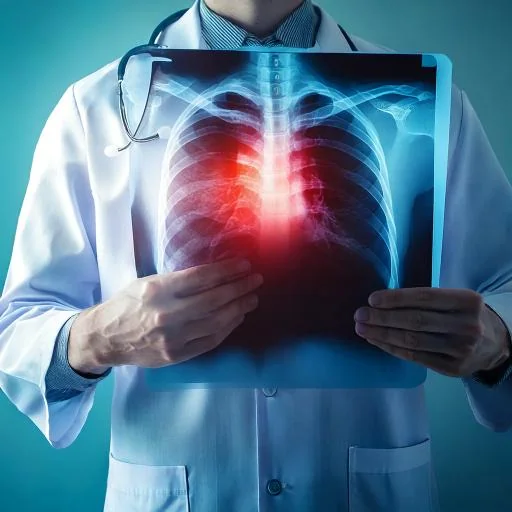
Lung carcinomas develop when malignant, or cancerous, cells grow uncontrollably in the lung. More than 95% of lung cancers are carcinomas, with several different subtypes.
For the broader clinical context, see Lung Cancer: Symptoms, Treatment and Surgery.
This article explains the types, symptoms, diagnostic tests and treatment options.
- 1. What is lung carcinoma?
- 2. Types
- 3. Symptoms
- 4. Causes and risk factors
- 5. Diagnosis
- 6. Treatment
- Frequently asked questions
1. What is lung carcinoma?
A carcinoma is a cancer arising from epithelial cells, the cells that line surfaces and structures in the body. In the lungs, carcinomas develop from cells associated with the bronchi, airways or air sacs.
They fall into two main groups: small cell lung cancer (SCLC) and non-small cell lung cancer (NSCLC).
2. Types
Approximately 85% of lung cancers are NSCLC and 15% are SCLC, although proportions vary between populations.
A) Non-small cell lung cancer (NSCLC)
NSCLC is the most common group. Major subtypes include the following.
1. Adenocarcinoma — approximately 40% of lung cancers
- The most common lung cancer subtype.
- Can occur in people who have never smoked.
- Often arises towards the outer parts of the lung.
- Symptoms: Persistent cough, breathlessness or chest pain, although early disease may cause none.
- Treatment: May include surgery, chemotherapy and targeted therapies for relevant alterations, such as EGFR mutations or ALK rearrangements.
2. Squamous cell carcinoma — approximately 30% of lung cancers
- Strongly associated with smoking.
- Often develops near the larger airways, or bronchi.
- Symptoms: Blood in sputum, hoarseness or chest pain.
- Treatment: May include surgery, radiotherapy and chemotherapy according to the stage and other factors.
3. Large cell carcinoma
- Can grow and spread rapidly.
- May occur in any part of the lung.
- Historical estimates attributed around 10% of lung cancers to this category, but modern pathological testing has reclassified many tumours, so its frequency depends on the classification used.
- Symptoms: Weight loss, breathlessness or fatigue.
- Treatment: May include chemotherapy, immunotherapy and radiotherapy, with surgery considered in appropriate early-stage cases.
B) Small cell lung cancer (SCLC)
- Accounts for approximately 15% of lung cancers.
- Strongly associated with smoking.
- Tends to grow quickly and spread early.
- Symptoms: Weight loss, pronounced fatigue or chest pain.
- Treatment: Surgery is uncommon and reserved for selected very early cases. Chemotherapy and radiotherapy are central treatments, with other medicines used when appropriate.
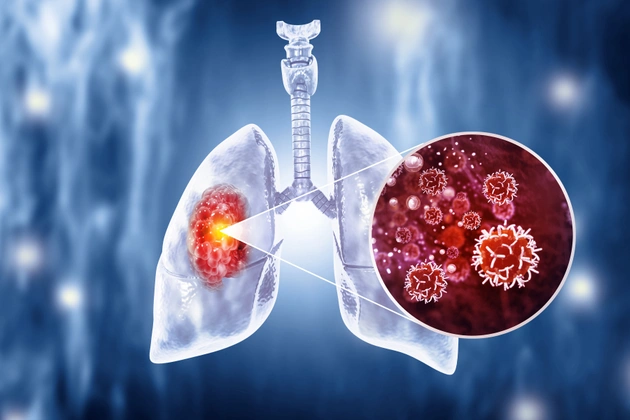
Lung carcinomas
3. Symptoms
Early lung cancer may produce no symptoms. As it develops, possible symptoms include:
- A persistent cough
- Blood in sputum, called haemoptysis
- Breathlessness or difficulty breathing
- Chest or back pain
- Unexplained weight loss
- Hoarseness or difficulty swallowing
- Wheezing
- Repeated lung infections, such as pneumonia or bronchitis
Persistent or concerning symptoms should be assessed promptly by a doctor.
4. Causes and risk factors
Important risk factors include:
- Smoking, associated with a large majority of lung cancer cases; estimates around 85% vary by population.
- Second-hand smoke exposure
- Air pollution and traffic-related pollution
- Asbestos, radon and certain chemical exposures
- Inherited susceptibility, including a family history of lung cancer
- Chronic lung conditions, such as COPD, pulmonary fibrosis and a history of TB-associated lung damage
5. Diagnosis
Earlier diagnosis can improve treatment options. Investigations include:
- CT: Identifies abnormal areas in the lungs.
- Biopsy: A tissue sample is examined to establish the diagnosis and subtype.
- PET-CT: Helps assess possible spread, but is not by itself proof of cancer.
- Blood and molecular tests: Support assessment of general health and identify tumour alterations relevant to treatment.
6. Treatment
Treatment depends on the cancer type, stage and the person's general health.
1. Surgery
- Most often used for suitable stage 1 and 2 disease, and selected locally advanced cases.
- Procedures may include lobectomy or pneumonectomy, with other lung-preserving operations in appropriate cases.
2. Chemotherapy
- An important component of treatment in many stage 3 and 4 cancers, often combined with other methods. Targeted therapy or immunotherapy may be central in suitable patients.
- Commonly used for SCLC, and also before or after surgery in selected NSCLC cases.
3. Radiotherapy
- Can be used when surgery is unsuitable or to control or shrink a tumour.
- May also treat brain metastases.
4. Immunotherapy
- Helps the immune system attack cancer cells.
- PD-L1 testing can guide treatment, but suitability also depends on the regimen, tumour alterations and clinical setting. Not all regimens require a positive PD-L1 result.
5. Targeted therapies
- Used for eligible cancers with alterations such as EGFR mutations, ALK rearrangements or ROS1 fusions.
Frequently asked questions
1. What is the outlook?
Outlook depends on the precise stage, general health and response to treatment. Five-year survival can be around 80% in some stage 1 groups, but figures vary by substage, population and treatment and do not predict an individual's course.
2. Can it affect people who have never smoked?
Yes. Adenocarcinoma, in particular, can occur in people who have never smoked.
3. Can it be treated?
Yes. Early disease may be treated with the aim of cure. Advanced disease can also be treated, sometimes with prolonged control, although treatment aims differ according to the individual situation.
4. Is lung cancer inherited?
Some inherited factors can increase risk. Many alterations found in a tumour arise during life and are not inherited; the two should not be confused.
Early diagnosis can improve the prospects of effective treatment. Avoiding smoking and adopting healthy habits reduce risk, while appropriate medical assessment addresses symptoms or individual screening needs. For specialist information, you can contact Prof. Dr. Kemal Karapınar through the Instagram account.
Sources and further reading
These resources provide general background on this topic; they do not replace an individual medical assessment.