
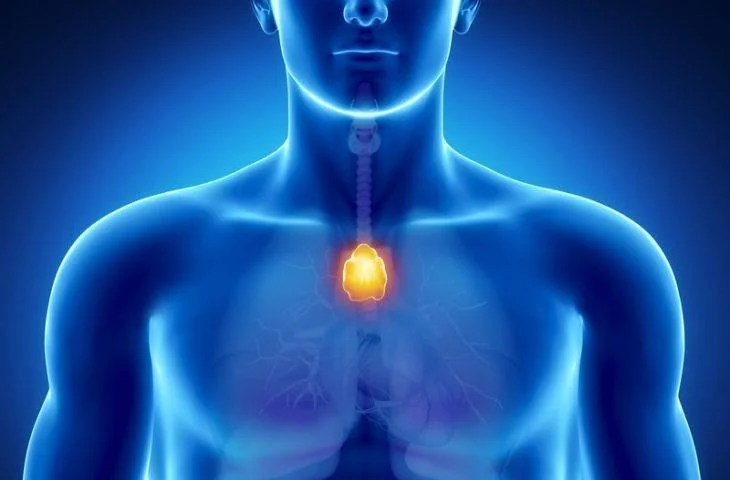
The immune system has a complex and essential role in keeping us healthy. The thymus gland, located just behind the breastbone, helps immune cells called T cells develop, particularly during childhood and adolescence. Some diseases involve the thymus or arise within it. In these situations, thymectomy, the surgical removal of the thymus, may be considered.
Related videos and posts
The linked Instagram content is in Turkish.
For the broader clinical context, see Surgery for Myasthenia Gravis.
Thymectomy can be part of a strategy to control an autoimmune disease or remove a thymic tumour. Who is suitable for this operation? In myasthenia gravis (MG) or thymoma, how do age, disease duration and other findings influence the decision? This guide explains the main indications, selection criteria and scientific reasoning behind an individual treatment plan.
What Is Thymectomy, and Why Is It Performed?
Thymectomy removes the thymus gland from the front of the chest. There are two main reasons to consider it:
Treatment of myasthenia gravis (MG): MG is an autoimmune disease that disrupts communication between nerves and muscles, causing weakness and muscles that tire easily. Some patients have thymic enlargement (thymic hyperplasia) or other thymic abnormalities associated with the immune response. Removing the thymus aims to improve disease control in appropriately selected patients.
Treatment of thymoma or thymic carcinoma: These tumours arise in the thymus. Thymoma is often slow growing but has malignant potential and should not simply be described as benign. Thymic carcinoma generally behaves more aggressively. Complete surgical removal is a principal treatment when the tumour can be removed safely; some patients need combined treatment.
In both settings, thymectomy aims to address a focus of disease and improve longer-term outcomes and quality of life. The underlying diagnosis, its extent and the person's ability to tolerate surgery guide the decision.
The Decision in Myasthenia Gravis
In MG, the immune system produces antibodies that interfere with communication at the junction between nerves and muscles. The thymus can be involved in this immune process. Selecting a patient for thymectomy is more nuanced when the aim is MG control rather than tumour removal.
Generalised Myasthenia Gravis and Thymectomy
Generalised MG is an important setting in which thymectomy may be considered. Disease confined to eye muscles is called ocular MG. Generalised disease can also affect swallowing, speech, limbs and breathing.
Criterion: Symptoms extend beyond the eye muscles. Antibody status, particularly acetylcholine receptor (AChR) antibodies, is also important; generalised symptoms alone do not make every patient a surgical candidate.
Explanation: Evidence is strongest for selected patients with AChR-antibody-positive generalised MG without a thymoma. Surgery aims to improve disease control and reduce treatment requirements. In ocular MG, benefit is less certain and decisions are individual.
Age: Why It Matters
Age is one factor in deciding on thymectomy. The thymus becomes smaller and less active after adolescence, a process called involution, although it does not become biologically irrelevant.
Younger adults: Early consideration is recommended particularly for adults aged 18–50 with AChR-antibody-positive generalised MG without thymoma. These are not rigid limits applicable to every patient.
Older adults: The balance of benefit and operative risk is assessed individually, especially after age 60. Age alone does not rule out surgery, particularly if a tumour is present. General health, MG subtype and response to medication matter.
Disease Duration and Early Thymectomy
Timing matters, and eligible patients should discuss surgery early in the disease course. However, there is no universal deadline of 6–12 months after symptoms begin.
Timing: Earlier consideration may be appropriate, but benefit is not restricted to the first year. The key randomised trial included patients with disease duration under five years.
Why early discussion helps: Timely assessment allows the neurology and surgical teams to weigh potential long-term benefit against risk. Surgery is elective and should take place when the patient is clinically stable.
Insufficient response to medication: Selected patients whose symptoms remain inadequately controlled, or who cannot tolerate treatment, may also be considered. The decision depends on the MG subtype and individual circumstances rather than disease duration alone.
Thymoma: A Tumour-Focused Decision
A thymoma is found in approximately 10–15% of people with MG. Conversely, many people with thymoma do not have MG. When a thymoma is present, the decision is driven mainly by the tumour's features, stage and resectability rather than the age and disease-duration considerations used for non-tumour MG.
What Is Thymoma, and Why Consider Thymectomy?
Thymoma arises from thymic epithelial cells. It is often slow growing but can invade surrounding tissue or recur. It differs from thymic carcinoma, which generally has a more aggressive course.
Surgical indication: Complete removal is the preferred treatment for a resectable thymoma. The aim is complete resection of the tumour and appropriate thymic and surrounding tissue. Surgery is not automatically suitable for every tumour, particularly unresectable or widely advanced disease.
Age and disease duration: There is no simple upper age cut-off based solely on the tumour's duration. The patient's overall condition, anaesthetic risk and feasibility of complete removal are assessed.
Staging: Stage, assessed with systems such as Masaoka–Koga, helps guide surgery and additional treatment. Early-stage thymomas can have favourable long-term outcomes after complete removal. Selected advanced tumours may require chemotherapy or radiotherapy with or without surgery.
When surgery is appropriate, achieving complete removal is an important determinant of the long-term result.
Thymectomy Techniques: Open and Minimally Invasive Approaches
The approach depends on tumour size and location, the patient's health, the disease being treated and surgical expertise. The two broad approaches are open surgery and minimally invasive surgery.
1. Open Surgery: Transsternal Thymectomy
This is a traditional approach to thymectomy.
Technique: A median sternotomy divides the breastbone down the middle, providing a wide view and space to operate.
Use: It may be selected for a large thymoma or a tumour involving surrounding structures, such as major vessels or the lining of the heart, when an operation is appropriate. It can help the surgeon remove the tumour and thymic tissue safely as a single specimen.
Advantage: It provides broad access for complete removal of thymic tissue and relevant mediastinal fat.
2. Minimally Invasive Approaches (VATS/Robotic Thymectomy)
These techniques use smaller incisions.
Techniques: Video-assisted thoracoscopic surgery (VATS thymectomy) and robotic thymectomy use a camera and instruments introduced through small chest incisions, often three to five depending on the approach.
Use: They are commonly considered for suitable patients with generalised MG without thymoma, and for selected small, localised thymomas.
Advantages: Smaller incisions may mean less pain, a shorter hospital stay and quicker recovery.
The selected approach must suit the disease and allow appropriate removal. For example, trying to remove a large tumour through an unsuitable small-incision approach may risk damaging its capsule. Each patient therefore needs an individual plan.
Expected Changes and Long-Term Effects After Thymectomy
Recovery goals differ according to the diagnosis. After thymoma surgery, monitoring for recurrence and decisions about further treatment are central. In MG, the longer-term aim is better muscle strength and disease control, with reduced symptoms and medication needs where possible.
Recovery in Myasthenia Gravis
Thymectomy does not usually improve MG immediately. Changes in the immune response take time.
Expected timing: Improvement may emerge over months or years. Remission means symptoms have disappeared; significant improvement may mean stronger muscles and less medication. The likelihood varies between individuals and patient groups.
Medication: MG medication normally continues after surgery. The neurologist may gradually reduce doses if control improves. Some patients eventually stop some medicines, but this should never be done without supervision.
Long-term effect: Surgery can provide sustained benefit in appropriately selected MG patients, although lasting remission is not guaranteed.
Follow-Up After Thymoma Surgery
Long-term surveillance remains important after tumour removal.
Recurrence: Risk depends on stage, tumour type and completeness of removal. CT or MRI is performed at intervals selected by the team.
Additional treatment: Radiotherapy or chemotherapy may be recommended for selected advanced tumours or incomplete removal, according to the full clinical assessment.
Effects on the Immune System
Although the thymus becomes smaller with age, it still contributes to T-cell development in adults. Existing immune cells continue functioning after surgery, but it is inaccurate to say that other organs simply replace all thymic functions or that long-term immune effects are impossible. The benefits and potential risks should be weighed against the reason for surgery. Evidence of long-term associations after adult thymectomy is observational and does not by itself prove that surgery caused those outcomes or outweigh established indications for treatment.
Frequently Asked Questions
Q1: What is recovery like, and when can I return to normal life?
Recovery depends on the approach. After minimally invasive VATS or robotic thymectomy, patients may spend around 3–5 days in hospital and return to daily activities over several weeks. After transsternal thymectomy, the breastbone needs time to heal; hospital stays may be around 5–7 days, with a return to full physical activity taking 6–12 weeks. These are approximate ranges. Heavy lifting and strenuous exercise should be avoided until the surgical team agrees they are safe.
Q2: Does thymectomy always cure myasthenia gravis?
No. Thymectomy is an important option for selected patients but does not guarantee a complete cure. The aims are remission or significant improvement, including less medication and fewer symptoms. Some people continue to need medication. Surgery is considered for its potential to improve the long-term course of disease.
Q3: Does removal of the thymus weaken immunity?
The adult immune system continues to function after thymectomy, and many patients do not experience obvious immune problems. However, the adult thymus still has a role in T-cell development, and it is not accurate to guarantee no long-term effect. Discuss the individual balance of benefit and risk with the treating team, particularly when surgery is being considered for MG or a thymic tumour.
Q4: How long does the operation take?
Duration varies with the technique and extent of disease, including tumour size and attachments to nearby structures. Minimally invasive VATS or robotic thymectomy may take around 1–3 hours. Complex open transsternal thymectomy, particularly for a large tumour near major vessels, can take longer.
Q5: What happens if thymectomy is not performed?
An untreated thymoma may grow or invade nearby structures, making treatment more difficult. The plan must reflect stage, resectability and the patient's health. In MG without a tumour, medical treatment can continue without surgery. For an eligible patient, this may mean forgoing a possible opportunity to improve control or reduce medication, but worsening is not inevitable.
Q6: Is thymectomy used for ocular MG?
The evidence is less clear than for selected patients with generalised MG. It is not routinely required for every patient whose disease affects only the eye muscles. It may be discussed in selected cases, particularly when symptoms are difficult to control or treatment causes problems. The decision is made with the neurologist, considering antibody status, symptoms and quality of life.
Q7: Is thymoma always an aggressive cancer?
Thymoma is a thymic epithelial tumour with malignant potential. Many are slow growing and have a favourable outlook when localised and completely removed. It should not be confused with thymic carcinoma, a distinct and usually more aggressive tumour. Some thymomas also behave aggressively, particularly at advanced stages. Treatment and pathological assessment are planned individually; a resectable thymoma is generally treated surgically.
Sources and further reading
These resources provide general background on this topic; they do not replace an individual medical assessment.