
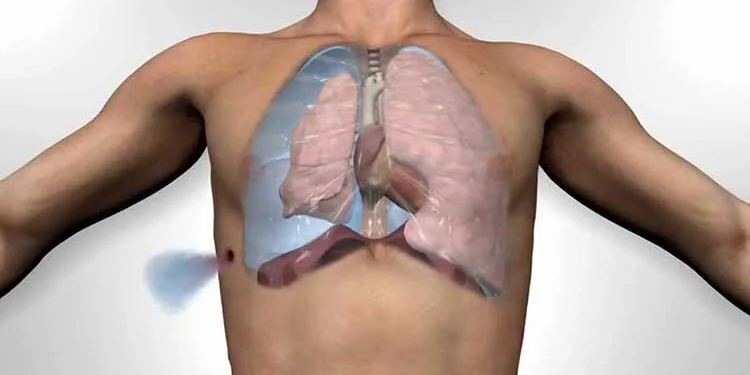
A pneumothorax can be a serious or life-threatening condition. Air collects in the pleural space around the lung, causing partial or complete collapse. Recovery is important for regaining comfortable breathing and activity. After treatment and approval from the clinical team, breathing exercises may support lung expansion, secretion clearance and recovery. They do not treat an active air leak or replace medical care.
Related videos and posts
The linked Instagram content is in Turkish.
For the broader clinical context, see Pneumothorax Surgery.
This article explains what pneumothorax is, its causes, symptoms and treatment, followed by six techniques sometimes used during recovery. The aim is to provide understandable information for patients. Prof. Dr. Kemal Karapınar's patient-centred approach emphasises adapting advice to individual circumstances. Regular, appropriately prescribed practice can help the return to everyday life.
What Is a Pneumothorax?
Often called a collapsed lung, pneumothorax occurs when air enters the space between the two pleural layers around the lung. Normally only a thin film of fluid lies between these surfaces. Air in that space disrupts normal lung expansion, and oxygen uptake may be affected.
Pneumothorax can occur spontaneously or follow trauma. Primary spontaneous cases are more common in tall, slim young adults, particularly men, and may involve rupture of small surface air pockets called blebs. Secondary cases occur with underlying lung disease. Trauma or medical procedures are other causes. Prompt assessment matters because a severe air leak can impair both breathing and circulation.
The lungs normally expand within the chest with each breath. Air around a lung can prevent this movement and cause breathlessness. The severity varies, so every patient requires individual assessment.
Causes
A common mechanism is rupture of a small surface bleb or bulla. Smoking and inherited susceptibility can increase risk. Underlying infections, COPD or, less commonly, asthma may contribute.
Traumatic causes include chest blows, rib fractures and penetrating injuries. Pressure changes during diving can also be relevant. Pneumothorax can occur during lung biopsy, mechanical ventilation or catheter placement. The clinical team considers the medical history and circumstances when assessing the cause and recurrence risk.
Ambient pressure changes during air travel are important when a pneumothorax is present. Rarely, thoracic endometriosis causes episodes related to menstruation. Avoiding smoking helps reduce risk; routine check-ups cannot guarantee prevention. Investigation of the cause informs the treatment plan.
Symptoms
Symptoms often start suddenly. Sharp chest pain on one side, breathlessness, rapid breathing and a fast heartbeat are common. Pain may worsen with a deep breath or cough. Pallor, sweating or feeling faint can occur.
In tension pneumothorax, increasing pressure affects the heart and major vessels and may cause shock. Small air collections can cause milder symptoms. Early diagnosis helps prevent deterioration.
Chest pain can also arise from a heart attack or other serious conditions. Seek urgent medical care for sudden chest pain or new breathlessness, rather than assuming it is anxiety or a minor problem.
Treatment
Treatment depends on symptoms, stability, the underlying lung condition and the extent of the air collection. Selected stable cases can be observed; oxygen is given when indicated for low oxygen levels. Other patients need aspiration or a chest drain to remove air and allow re-expansion.
An ongoing air leak, recurrence or a high-risk situation may require surgery. Video-assisted thoracoscopic surgery (VATS) can remove a leaking area and include a procedure to help the pleural surfaces adhere, reducing recurrence risk.
After treatment, physiotherapy may be appropriate. Stopping smoking and following the agreed plan support recovery and risk reduction, but no lifestyle measure guarantees that pneumothorax will not recur.
Recovery
Recovery may take weeks or longer depending on the cause, treatment and general health. Rest and symptom control are important initially; oxygen is used only when clinically needed. Once the lung has expanded and the team confirms it is safe, activity is increased gradually.
Fatigue or mild breathlessness may occur, but new or worsening symptoms require reassessment. Avoiding smoking, eating well and attending follow-up support recovery. The programme is tailored to each patient.
Recurrence remains possible. Flying and diving need specific advice: do not fly with an unresolved pneumothorax, and do not resume scuba diving without specialist clearance. Returning to daily activity is different from being cleared for pressure-related activities.
Why Breathing Exercises May Help
Selected exercises can encourage comfortable lung expansion, improve breathing control and help clear mucus. They may be useful after surgery or a period of limited movement. They have not been shown to reduce pneumothorax recurrence by a fixed percentage.
Start only when your surgeon or physiotherapist advises, particularly if a drain or air leak remains. The programme should fit the operation, symptoms and underlying lung health.
Deep breathing temporarily increases the volume of air entering the lungs, but exercises are an adjunct to recovery, not a way to seal a leaking lung.
1. Diaphragmatic Breathing
This technique encourages relaxed use of the diaphragm, the main breathing muscle, rather than excessive upper-chest effort.
How: Sit comfortably or lie in an approved position. Place one hand on the chest and one on the abdomen. Breathe in gently through the nose, allowing the abdomen to rise, then breathe out slowly. A brief pause can be used if comfortable and approved; do not strain or force a four-second hold. A clinician may suggest short sessions, building towards 5–10 minutes, 3–4 times a day if suitable.
Possible benefits: Better breathing control and relaxation. It can help you become aware of unnecessary tension.
Take care: Begin briefly. Stop for pain, dizziness or worsening breathlessness.
2. Pursed-Lip Breathing
This lengthens the out-breath and may help some people manage breathlessness.
How: Sit comfortably. Breathe in gently through the nose for about two seconds, then breathe out slowly through loosely pursed lips for roughly four seconds or a comfortable longer interval. Do not blow forcefully. A short set of about ten breaths may be used if advised.
Possible benefits: A slower breathing rhythm and less sense of breathlessness, particularly with coexisting obstructive lung disease.
Take care: Keep the effort gentle rather than trying to empty the lungs forcefully.
3. A Deep Breath with a Short Hold
A comfortable deep breath can help expand the lungs once the team has confirmed this is appropriate.
How: Sit or lie in a comfortable position. Breathe in slowly, pause briefly if advised and breathe out gently. Some programmes use 5–10 repetitions with rests; avoid a prolonged or strained breath-hold.
Possible benefits: Encourages lung expansion and breathing awareness.
Take care: Rest if you feel dizzy. New chest pain or increasing breathlessness needs medical advice.
4. Incentive Spirometry
An incentive spirometer is a feedback device that encourages a slow, deep breath. It is not a substitute for diagnostic lung function testing.
How: Sit upright, hold the device as instructed and seal your lips around the mouthpiece. Breathe in, slowly raising the indicator. Pause briefly if advised, then relax and breathe out normally. Follow the frequency and target set by the physiotherapist rather than an arbitrary universal schedule.
Possible benefits: Supports practice of sustained inspiration as part of a broader rehabilitation plan. Its benefit is not guaranteed in every patient.
Take care: Keep the device clean and use it only when the team has approved it for your condition.
5. Gentle Chest and Rib Mobility
Comfortable movement can reduce stiffness and make breathing easier.
How: If cleared after your procedure, slowly raise the arms within a pain-free range while breathing gently. Small side bends may be added, with around five repetitions if tolerated.
Possible benefits: Improved chest and shoulder flexibility during recovery.
Take care: Respect wound, drain and lifting restrictions. Do not force movement through pain.
6. Controlled Huffing
A huff can help move mucus without repeated forceful coughing.
How: Take a comfortable breath, then breathe out with an open mouth as if gently steaming a mirror. Rest between attempts. A physiotherapist may prescribe a small number, such as 3–5, according to need.
Possible benefits: Helps move secretions so they can be cleared.
Take care: Avoid repeated hard coughing. Ask for guidance if you have pain, a persistent air leak or difficulty clearing sputum.
Benefits and Limitations
Appropriate breathing practice can support comfort, secretion clearance and activity tolerance. Exercises are low-cost and can often continue at home once taught. They do not guarantee faster healing or prevent recurrence, and there is no established universal 20–30% reduction in pneumothorax recurrence from these exercises.
A programme might begin with short daily sessions and increase over several weeks. The schedule and timing of improvement are individual, rather than a guaranteed result within 2–4 weeks.
Precautions
Obtain clinical approval first. Stop for pain, dizziness or worsening breathlessness and seek advice. Exercise in a smoke-free environment. The plan should be adapted to the cause of pneumothorax and the treatment received.
Frequently Asked Questions
What is a pneumothorax? Air collects in the pleural space and causes partial or complete lung collapse. A lung leak or injury can cause it.
What are the symptoms? Sudden chest pain, breathlessness and a fast heartbeat are common warning signs.
How is it treated? Observation, aspiration, chest drainage or surgery may be used according to the situation.
How long should breathing exercises continue? Follow your prescribed schedule. Short sessions several times a day may be advised during recovery, sometimes for weeks or months.
Can it recur? Yes. Smoking increases risk. Exercises support recovery but are not proven recurrence prevention.
Do breathing exercises prevent pneumothorax? No. They do not seal an active leak or guarantee against another episode.
When can sport resume? Only after clinical clearance and gradual progression. A commonly suggested interval of 4–6 weeks is not suitable for every patient or activity.
What is an incentive spirometer? A device that encourages a slow deep inhalation using visual feedback; the team teaches the technique.
Can pneumothorax differ in women? Occasionally it is associated with thoracic endometriosis and the menstrual cycle. The main symptoms remain similar.
Can exercises have side effects? Overexertion can cause dizziness, pain or breathlessness. Stop and seek advice if symptoms occur.
Conclusion
These six techniques may be used as part of recovery after pneumothorax when the clinical team confirms they are suitable. They range from relaxed diaphragmatic breathing to mucus-clearing huffs. Their purpose is to support comfortable breathing and a gradual return to activity, not to replace treatment or promise prevention of recurrence.
Prof. Dr. Kemal Karapınar's approach combines medical treatment with individual recovery advice. A patient-centred plan can make rehabilitation more comfortable and easier to follow.
Sources and further reading
These resources provide general background on this topic; they do not replace an individual medical assessment.