
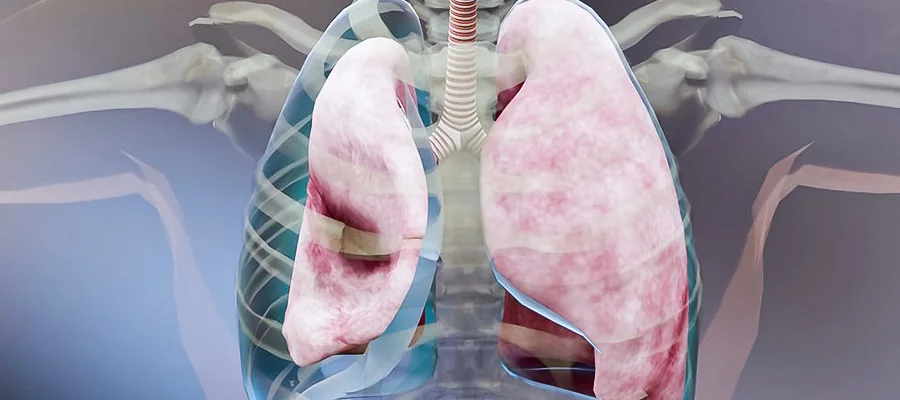
Youth is often an active, energetic time, but unexpected health problems can still occur. Pneumothorax, commonly called a collapsed lung, is one such problem. It happens when air enters the space around a lung, causing it to collapse partly or completely. Sudden chest pain and breathlessness are typical symptoms, and urgent assessment may be necessary.
Related videos and posts
The linked Instagram content is in Turkish.
For the broader clinical context, see Pneumothorax Surgery.
Pneumothorax in young people is often primary spontaneous pneumothorax (PSP), which develops without known underlying lung disease. Smoking, body build and inherited factors can contribute. This article explains the condition, symptoms, risks, diagnosis and treatment in accessible language. Prof. Dr. Kemal Karapınar assesses each patient's circumstances to plan suitable care. This is general information, not a substitute for individual medical advice.
Pneumothorax can affect quality of life, but early recognition and appropriate treatment help manage it. The following sections explain the subject step by step.
What Is Pneumothorax?
Pneumothorax means air in the pleural space between the lung and chest wall, often from a leak through the lung's outer lining. The air prevents normal expansion and can cause a partial or complete collapse, affecting breathing and oxygen uptake.
Spontaneous pneumothorax is classified as primary (PSP) or secondary (SSP). PSP occurs without established underlying lung disease, often in otherwise healthy young people. SSP occurs alongside conditions such as COPD, cystic fibrosis or other lung disease. PSP is particularly associated with young men, often aged 15–35. Rupture of small air-filled areas on the lung surface, called blebs or bullae, may contribute.
Severity depends on the leak and its effect on breathing and circulation, not simply its size. Some stable cases resolve under observation, while others need drainage. Tension pneumothorax is a dangerous pressure build-up that affects the heart and major vessels; it is an emergency, rather than a routine later stage of every pneumothorax. Many young people recover well with appropriate management.
What Are the Symptoms?
Symptoms often start suddenly. Sharp pain on one side of the chest may worsen with deep breathing or coughing. Breathlessness is another common symptom. Cough, a fast heartbeat, tiredness or faintness may also occur.
Symptoms can begin during activity or at rest. Occasionally they are mild and the person does not recognise the problem. Severe symptoms require immediate medical help. Early diagnosis matters, and unexplained chest pain should not be dismissed.
Although PSP is more common in tall, slim young men, women can also develop serious pneumothorax. Symptoms overlap with other lung and heart conditions, so a proper clinical assessment is needed.
Why Does It Occur in Young People?
In young people, pneumothorax often develops spontaneously without an injury. A small air-filled area near the lung surface may rupture, allowing air into the pleural space. Inherited susceptibility and environmental exposures can play a part.
Smoking is an important risk factor because it damages lung tissue and contributes to abnormal air spaces. Changes in pressure, such as during scuba diving or altitude exposure, are relevant in susceptible people. Injury can cause traumatic pneumothorax, and medical procedures can cause an iatrogenic pneumothorax.
A tall, slim build is associated with PSP. Family history may suggest inherited susceptibility. Prof. Dr. Kemal Karapınar considers lifestyle and medical history when planning care and discussing recurrence prevention.
Eight Risk Factors and Relevant Exposures
Lifestyle and inherited factors are relevant. The following list distinguishes established associations from exposures that may need individual advice:
- Smoking: Smoking irritates and damages lung tissue and substantially increases PSP risk. The size of the increase varies with exposure and the population studied; a single multiplier does not apply to everyone.
- Tall, slim build: This body type, sometimes called an asthenic build, is associated with PSP, especially in young men. Differences in mechanical stress within the lung may contribute.
- Male sex: PSP occurs more often in young men than in women; reported differences vary among studies and populations.
- Family history: A family history can suggest genetic susceptibility. It is worth discussing with a clinician, particularly if several relatives are affected; routine screening is not automatically needed for everyone.
- Connective-tissue disorders: Conditions such as Marfan or Ehlers–Danlos syndrome can increase susceptibility through changes in tissue strength.
- Pressure changes: Diving and altitude exposure need specialist consideration, particularly after a pneumothorax. Ordinary air travel should not be assumed to cause PSP in every healthy young person.
- Underlying lung disease: Conditions such as cystic fibrosis and other established lung diseases can cause secondary spontaneous pneumothorax.
- Second-hand smoke: Avoiding smoke exposure supports lung health. It should not be claimed that passive exposure carries exactly the same pneumothorax risk as active smoking.
Understanding these factors helps guide discussion and risk reduction. Prof. Dr. Kemal Karapınar takes them into account when advising patients. Healthy habits can reduce avoidable risks, although not every episode is preventable.
How Is Pneumothorax Diagnosed?
Assessment begins with symptoms and examination. A doctor listens to the chest; reduced breath sounds on the affected side may support the diagnosis.
A chest X-ray commonly confirms pneumothorax and shows its extent. CT can provide further detail about small air collections, blebs or underlying lung disease. Ultrasound may help provide rapid assessment in emergency settings.
The history includes smoking, family history and recent activities. This information helps identify the likely cause and plan individual treatment.
Treatment: Options, Benefits and What to Expect
Treatment depends on symptoms, physiological stability, the type of pneumothorax, patient preferences and available follow-up. Size is one consideration but is not the only reason to intervene. Options include observation, needle aspiration, drainage and surgery.
Observation and Oxygen When Needed
Selected stable patients with minimal symptoms may be managed conservatively while the body absorbs the air. Oxygen is provided when clinically indicated, rather than automatically giving high-flow oxygen to every patient.
Benefits: Avoids an invasive procedure and its associated risks. Some patients can be managed through an outpatient pathway with appropriate support.
Process: Follow-up examination and chest imaging assess resolution. Admission and its duration depend on the individual situation; a fixed 1–3-day stay is not required for everyone.
Needle Aspiration
A needle or small catheter is used to withdraw air from the pleural space in suitable cases.
Benefits: A less invasive way to remove air, which may avoid a larger chest tube.
Process: Local anaesthetic is used. The procedure may take around 15–30 minutes, followed by reassessment and imaging. Further treatment may be needed if aspiration is unsuccessful, and recurrence remains possible.
Tube Thoracostomy: A Chest Drain
A drain placed between the ribs removes pleural air when drainage is indicated.
Benefits: Provides ongoing drainage and allows the lung to expand while the leak heals.
Process: The drain is generally inserted under local anaesthetic. It may remain for several days, often around 2–5, depending on the leak and lung expansion. Suction is used selectively, not automatically. Pain relief and monitoring are important, and recovery may take 1–2 weeks or longer.
Surgery: Video-Assisted Thoracoscopic Surgery (VATS)
Surgery may be considered for recurrence or other indications. It treats the area of leakage and may include pleurodesis, which encourages the lung lining and chest-wall lining to adhere.
Benefits: Uses small incisions and reduces the risk of recurrence, although it cannot guarantee that pneumothorax will never return.
Process: Surgery is performed under general anaesthetic, often taking around 1–2 hours. A hospital stay of about 3–5 days is common but varies. Recovery and any physiotherapy are tailored to the patient; some recover quickly, while full recovery may take several weeks.
Pleurodesis
Pleurodesis encourages the pleural layers to adhere, using a surgical method or a substance such as sterile medical talc when appropriate.
Benefits: Reduces the risk of another pneumothorax.
Process: It may be performed during VATS or through another suitable approach. Recovery commonly takes several weeks, sometimes 2–4, depending on the treatment.
Prof. Dr. Kemal Karapınar adapts treatment to age, clinical findings and risk factors. Stopping smoking and attending follow-up are emphasised after treatment.
Can Pneumothorax Be Prevented?
Managing avoidable risk factors is important, especially stopping smoking. Balanced nutrition and suitable exercise support general health, but do not guarantee prevention. Pressure-related activities, particularly diving, require medical advice after pneumothorax.
Awareness helps young people recognise symptoms. Those with a family history should discuss whether specialist assessment is appropriate rather than arranging routine screening on their own. Preventive advice forms part of individual long-term care.
Frequently Asked Questions
- What is pneumothorax, and how does it happen? Air enters the pleural space, often through a leak from the lung. It may develop spontaneously in young people.
- What are the symptoms? Sudden chest pain, breathlessness and sometimes cough. Severe symptoms require emergency assessment.
- Why is it associated with young people? Body build, smoking and inherited susceptibility contribute, particularly in young adults.
- Can it resolve on its own? Some stable cases can be observed, but medical assessment and follow-up are necessary to decide safely.
- What treatments are available? Observation, oxygen when needed, needle aspiration, a chest drain or surgery.
- Can it return? Yes. Recurrence after a first episode is a recognised risk, with estimates often around 20–50% in different settings. Surgery can reduce this risk.
- How does smoking increase risk? It damages lung tissue and contributes to abnormal air spaces and inflammation.
- Is surgery risky? Minimally invasive surgery is generally well tolerated in suitable patients, but all operations have risks that require individual discussion.
- How long is recovery? Some uncomplicated cases improve over 1–2 weeks, while recovery after surgery may take 4–6 weeks. Imaging and the treating team's advice guide return to activities.
- Is it preventable? Avoiding smoking and managing relevant risks can help, but prevention is not guaranteed.
Conclusion
Pneumothorax in young people is associated with factors including smoking, body build, sex and family history. Recognising symptoms and understanding diagnosis and treatment help people obtain care promptly. The most suitable treatment depends on the individual, not a single rule.
Prof. Dr. Kemal Karapınar combines thoracic-surgery experience with an assessment of each patient's needs when planning pneumothorax care.
Sources and further reading
These resources provide general background on this topic; they do not replace an individual medical assessment.