
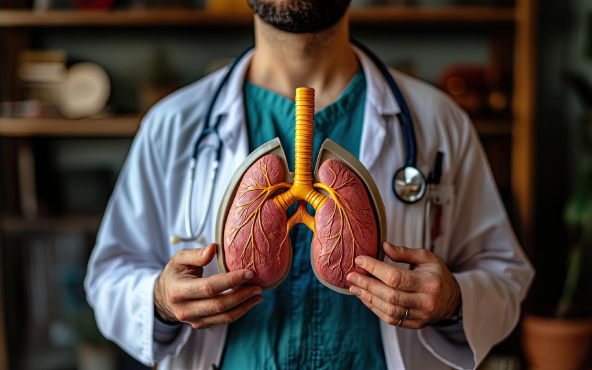
The thymus is a small organ behind the breastbone that plays an important part in the early development of the immune system. Thymectomy, its surgical removal, is performed for thymoma, a tumour of the thymus, and for selected people with the autoimmune condition myasthenia gravis (MG). In suitable patients with MG, it can improve symptoms over time and sometimes lead to remission, with an important effect on quality of life.
For the broader clinical context, see Surgery for Myasthenia Gravis.
As with other major surgery, informed, carefully supported recovery is essential. Recovery involves healing the surgical wounds, adapting physically and managing changes in MG symptoms. Although recovery after thymectomy differs between individuals, it can be considered in three stages: hospital care, returning home and longer-term adjustment. This article explains these stages, expectations and possible risks.
Early Recovery After Thymectomy: Hospital Care to Discharge
The first stage of recovery after thymectomy covers the days immediately after surgery. Hospital stay often ranges from one to seven days, depending on whether surgery involves a sternotomy, an incision through the breastbone, or a minimally invasive technique such as VATS. Smaller incisions commonly allow a shorter stay and faster early recovery.
Intensive Care and Ward Monitoring: The First 24 Hours
Immediately after surgery, some patients need a short period in intensive care or another closely monitored recovery area. Breathing, heart rhythm and other vital signs are watched carefully. Stable breathing is particularly important after chest surgery and in people with MG.
Transfer to the surgical ward takes place when the patient is sufficiently stable—awake, breathing adequately without ventilator support and with pain controlled. The timing varies with individual needs.
Pain Relief and Breathing Exercises
Pain can follow the incision and handling of tissues inside the chest. Effective pain relief, given through a vein or by mouth, helps you feel comfortable enough to breathe deeply, cough and exercise. Good lung expansion helps reduce complications such as retained mucus, areas of underinflated lung and pneumonia.
Deep breathing and supported coughing help keep the lungs expanded and clear mucus. These exercises usually continue for a time after discharge, following the team's instructions.
Drain Removal and Discharge Criteria
Chest drains placed during surgery remove air, blood and fluid. They are often removed within one to three days when drainage and the overall clinical findings are satisfactory. Removal is an important step towards discharge.
Drain removal alone does not determine readiness to go home. You should be free of significant fever or signs of active wound infection, able to eat and drink, and comfortable with oral pain medicine. In MG, swallowing and breathing must also be stable.
Returning Home: The First Weeks of Recovery
Going home begins the second stage of recovery after thymectomy. Over roughly two to six weeks, daily activities gradually resume, but ongoing care and attention remain important.
Wound Care and Infection Prevention
Keep the sternotomy incision or VATS port wounds clean and dry as instructed. Follow your team's advice on showering, bathing and when the wound may get wet. Increasing redness, swelling, warmth, foul-smelling discharge or severe pain needs prompt assessment.
Some stitches dissolve; others need removal at a planned appointment. Let scabs separate naturally, avoid irritating the wound and wear comfortable clothing that does not rub it.
Nutrition and Hydration
Healing requires adequate nutrients. A balanced diet containing protein and fibre supports tissue repair and helps prevent postoperative constipation.
Drink enough fluid unless your clinicians have prescribed a restriction. If MG-related swallowing difficulty persists, food texture may need adjustment to reduce choking or aspiration risk. Soft, moist or puréed foods may be recommended after an individual swallowing assessment.
Balancing Activity and Rest
Rest is important, but prolonged bed rest can slow recovery and increase blood-clot risk. Short walks around the home support circulation and should be increased gradually.
Avoid excessive strain on the chest, especially after sternotomy:
Lifting: Restrictions commonly last six to eight weeks. Your team may advise avoiding loads heavier than approximately 3–4 kg while the breastbone heals; follow your individual limits.
Arm movements: Pushing, pulling and reaching may need temporary adjustment. When rising from a chair, using your legs rather than pushing heavily through your arms can reduce stress on the breastbone.
Stairs are often manageable with pacing and rest. Driving may be considered after approximately four to six weeks, once chest movement is comfortable, emergency manoeuvres are possible and medicines no longer impair alertness. Clearance depends on the operation and individual recovery.
Long-Term Recovery and Myasthenia Gravis Management
Recovery after thymectomy extends beyond wound healing. In MG, changes in immune activity and symptoms may take months or years.
Expected Changes in MG Symptoms
The benefits of thymectomy do not usually appear immediately. In suitable patients, changes in immune activity may gradually improve symptoms and reduce medication needs. Improvement or remission may emerge over several months to three years, although the response varies.
Remission: Research in selected groups shows a greater likelihood of improvement and reduced treatment requirements after thymectomy than with medication alone. Remission is not guaranteed, and some patients notice little change.
Signs of improvement: Weakness affecting swallowing, speech or eye movements may lessen. Improvement can fluctuate: a good day may be followed by greater tiredness or weakness. These changes should be reviewed with the treating neurologist rather than assumed to be harmless.
Medication Adjustments: Continuing MG Treatment
Thymectomy does not mean stopping anticholinesterase medicines or immunosuppressants immediately. If symptoms improve, medication doses may gradually be reduced under specialist supervision.
Changes are based on sustained clinical assessment and follow-up. MG treatment often remains necessary after surgery; never reduce or stop it without your treating team's advice.
VATS Compared with Sternotomy
Thymectomy was traditionally performed through sternotomy, which opens the breastbone. Minimally invasive approaches, including video-assisted thoracoscopic surgery (VATS), are now used when appropriate.
VATS: A camera and instruments are introduced through small chest incisions. Early pain and hospital stay are often reduced, with discharge commonly after one to three days and an earlier return to everyday activities.
Sternotomy: This involves a larger incision and time for the breastbone to heal. A hospital stay of about five to seven days may be needed. It may be necessary for some larger thymomas or more complex operations.
Minimally invasive surgery can offer early recovery advantages, but the approach must allow safe, complete surgery. Long-term MG outcomes also depend on patient selection and the extent of thymus removal. Surgical technique is an important influence on the pace and comfort of recovery after thymectomy.
Risks and Possible Complications During Recovery
Thymectomy is generally well tolerated in experienced centres, but it has surgical risks. Careful observation during recovery after thymectomy helps detect problems early.
Early Risks During Hospital Care
Bleeding: Bleeding during or soon after surgery may cause increased drain output and occasionally require a further procedure.
Infection: Wound infection or pneumonia can occur. Breathing exercises and mobilisation help support recovery. Wound redness, warmth or discharge should be assessed.
Pneumothorax: Air may collect around the lung, causing breathlessness and chest pain. A chest drain may be required.
Nerve injury: Injury to nerves supplying the vocal cords, particularly the recurrent laryngeal nerves, can cause temporary or permanent hoarseness.
Later Complications and Warning Signs
Persistent chest pain: Incision-related or nerve-related pain after VATS or open surgery can sometimes last for months. It often eases over time, but persistent pain deserves assessment and treatment.
Wound-healing problems: After sternotomy, the breastbone may occasionally heal poorly. Prominent scars can also develop. Following wound-care advice helps reduce avoidable problems.
Myasthenic crisis: Severe weakness of the breathing muscles can cause respiratory failure. It may occur early after surgery or be triggered later by infection or stress. Rapidly worsening weakness, swallowing difficulty or breathlessness requires urgent medical attention.
Knowing these risks and reporting unusual changes helps support a safer recovery.
Frequently Asked Questions
These answers address common concerns about recovery after thymectomy.
Question 1: When does thymectomy start to affect myasthenia gravis symptoms?
The effect is usually gradual. Changes in immune activity take time, and improvement may begin several months after surgery. More substantial benefits or remission can develop over the first one to three years. Weakness and medication needs may decrease gradually, but some patients experience no substantial change. The likelihood of benefit depends on the type of MG and individual clinical circumstances.
Question 2: How long will I stay in hospital?
This depends greatly on the operation and your recovery.
Minimally invasive surgery, such as VATS: Many patients leave hospital after one to three days.
Open sternotomy: Hospital stay may be five to seven days, or longer if additional care is needed.
Discharge depends on stable breathing and swallowing, controlled pain, absence of significant fever and satisfactory management or removal of chest drains.
Question 3: When can I return to work and normal life?
The type of work and surgical approach both matter.
Desk work and light activity: After uncomplicated VATS, some people return in two to three weeks.
Heavy work or sternotomy: Returning to strenuous work or sport commonly takes six to eight weeks or longer, allowing the breastbone to heal. Lifting limits, sometimes around 3–4 kg initially, must be individually agreed with your team.
Question 4: How long does chest pain last, and what can help?
Chest and wound pain are expected after surgery. Hospital treatment may include intravenous medicine, followed by oral pain relief at home, often for the first one to two weeks. Pain usually decreases noticeably during the early weeks.
Some patients develop persistent nerve-related pain around the incision or ribs, sometimes called post-thoracotomy pain. Specific treatments are available. Pain relief should allow comfortable movement, deep breathing and coughing; seek advice if pain remains severe or limits activity.
Question 5: Does thymectomy guarantee complete remission of MG?
No. Thymectomy does not guarantee complete remission or a life without medication. It is an effective option for suitable patients and can improve long-term outcomes. Research shows improved disease control in selected groups compared with medication alone. Results vary, but many patients experience less weakness or need lower medicine doses.
Question 6: When can I drive?
Driving may be possible after approximately four to six weeks, but individual clearance is needed. Important considerations are:
Medication: Pain medicines must no longer impair attention or reactions.
Breastbone stability: After sternotomy, sufficient healing is needed to tolerate steering and sudden braking safely.
Movement: You must be able to wear a seat belt, turn the steering wheel and perform emergency manoeuvres without limiting pain or weakness.
Question 7: When can I resume sexual activity?
Timing depends on comfort, pain and the operation. Protect the wounds and, after sternotomy, avoid positions that put pressure on the chest or require strenuous effort during the six-to-eight-week healing period, according to your team's advice. After uncomplicated VATS, some patients feel ready sooner, often after two to three weeks, but movements that strain the wounds should still be avoided.
Sources and further reading
These resources provide general background on this topic; they do not replace an individual medical assessment.