
“Could my lung collapse again?” This is a common question after pneumothorax. The answer varies: the circumstances of the first episode, underlying lung disease and previous treatment all matter.
For the broader clinical context, see Pneumothorax Surgery.
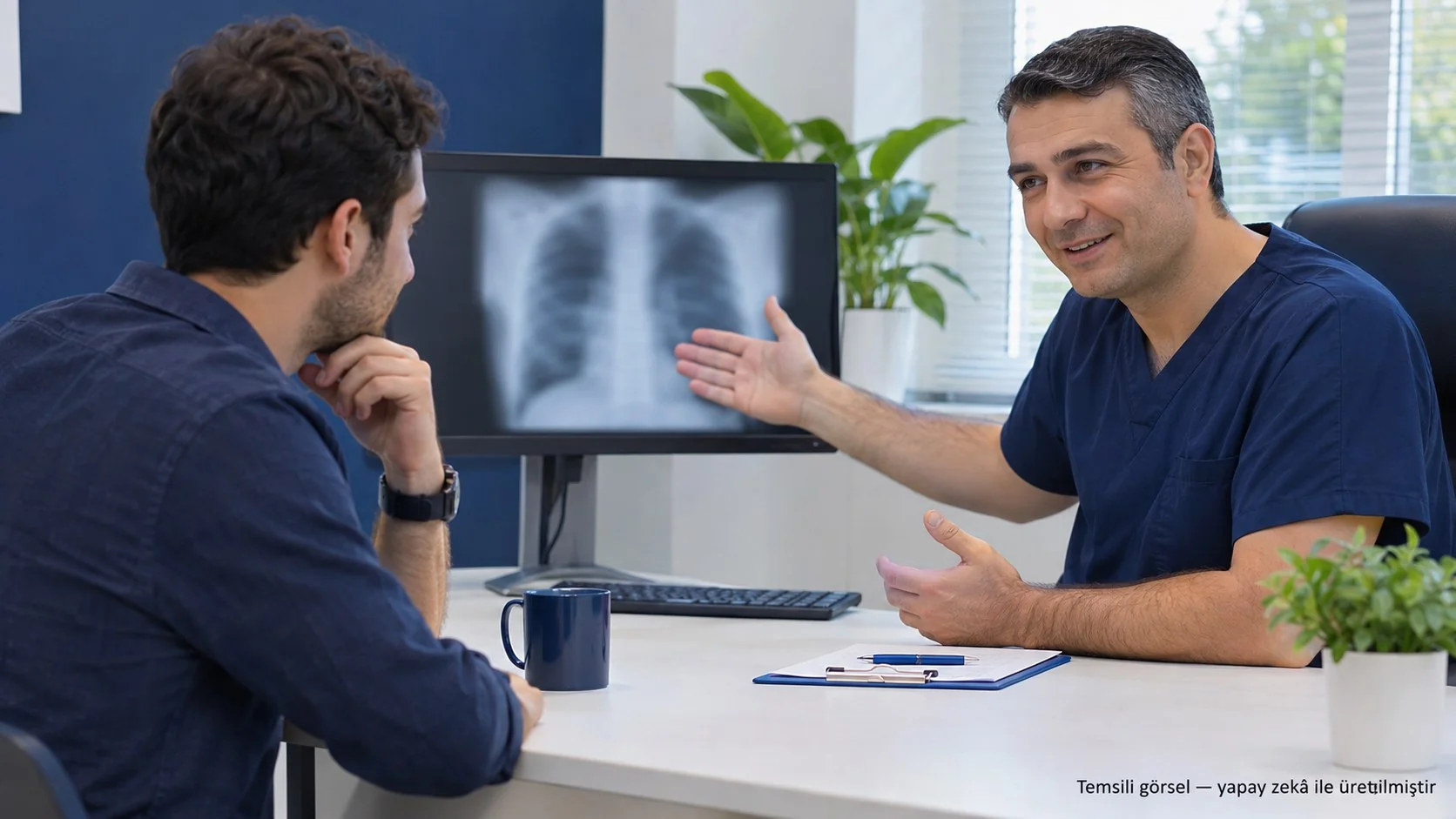
AI-generated illustration created for this article. It does not depict a real patient, clinician or clinical record. The Turkish image label identifies it as illustrative.
What is a collapsed lung?
Pneumothorax occurs when air collects between the lung and the chest wall, limiting lung expansion. Treatment aims to control this air, allow the lung to expand and, where appropriate, reduce recurrence risk.
Does everyone need surgery?
No. Close observation may be considered in appropriately selected, clinically stable people with mild symptoms and no known underlying lung disease. Others may need needle aspiration or a chest drain. Decisions depend on symptoms and clinical condition, rather than imaging size alone.
When is surgery considered?
A second episode on the same side or a first episode on the opposite side is an important reason for surgical assessment. Air leakage that continues despite a chest drain may also lead to consideration of surgery.
For occupations such as flying or diving, where recurrence could have serious consequences, preventive treatment may be discussed after the first episode. A first episode does not automatically mean that surgery is necessary.
The joint European guideline suggests considering early surgery in selected patients with primary spontaneous pneumothorax who prioritise recurrence prevention. The certainty of evidence is low. Decisions for people with underlying lung disease require a separate individual assessment.
What happens during minimally invasive surgery?
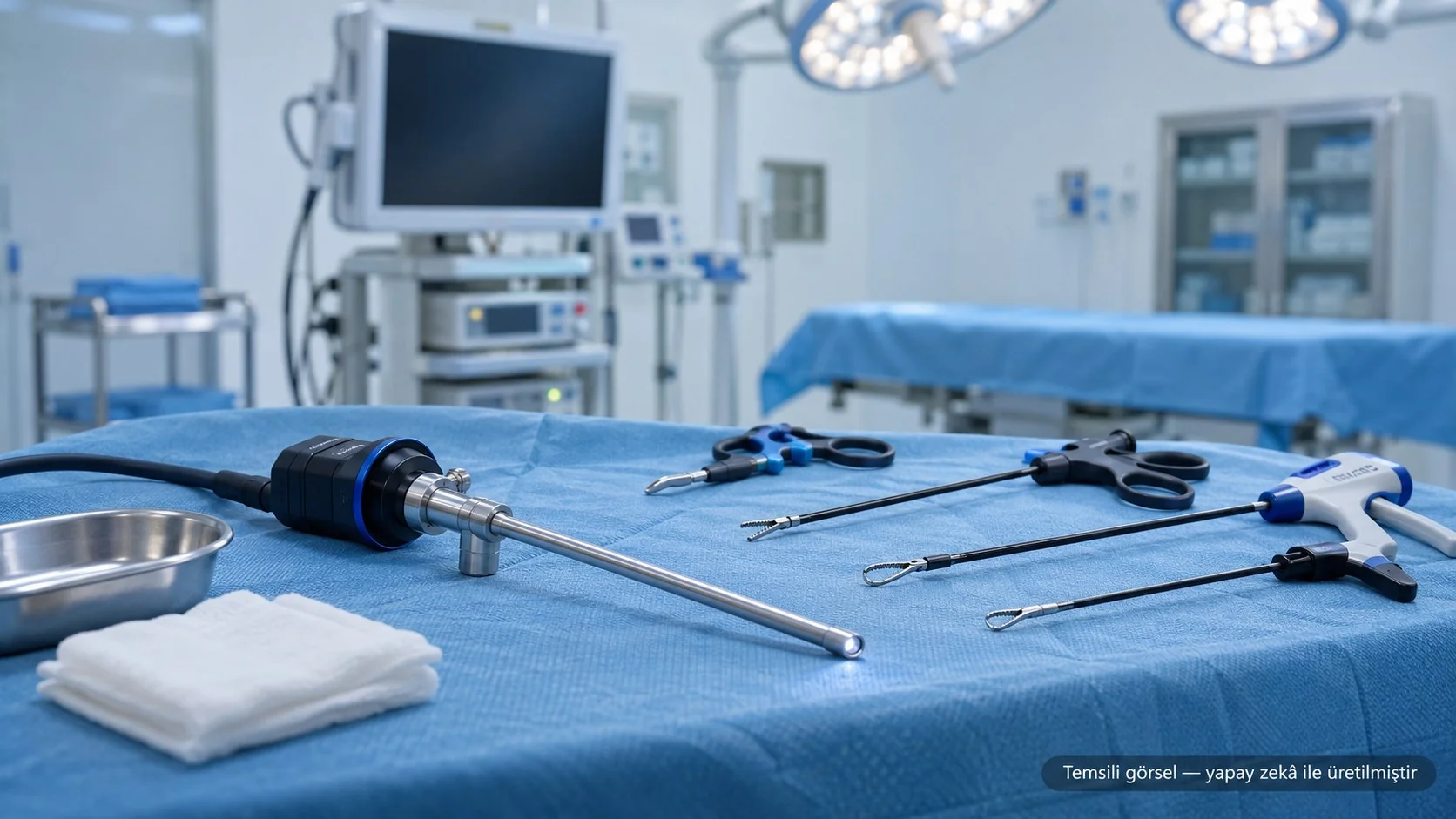
AI-generated illustration created for this article, not a real operation or a precise demonstration of surgical technique. The Turkish image label identifies it as illustrative.
Video-assisted thoracic surgery (VATS) uses a camera and instruments through small incisions. In suitable patients, air-leak-associated blebs or bullae may be removed and procedures on the pleural lining performed to reduce recurrence risk.
The operation is tailored to the patient. Surgery can reduce recurrence risk, but no method guarantees that pneumothorax will never recur.
Making the decision together
The potential benefits, risks, recovery and non-surgical options should be discussed with the patient. An individual treatment plan is essential.
Seek urgent medical assessment for sudden chest pain or new breathlessness.
For an individual assessment of your treatment options, consult a respiratory medicine specialist and a thoracic surgeon.
Sources and image information
This article is general patient information based on guidelines, not a report of a new research study.
- British Thoracic Society Guideline for pleural disease (2023)
- Joint ERS/EACTS/ESTS clinical practice guidelines on adults with spontaneous pneumothorax (2024)
Image source: ChatGPT/OpenAI image generation for this draft, 3 November 2026. No third-party clinical photographs were used. Both images are labelled illustrative.